Why marble needs gentle care
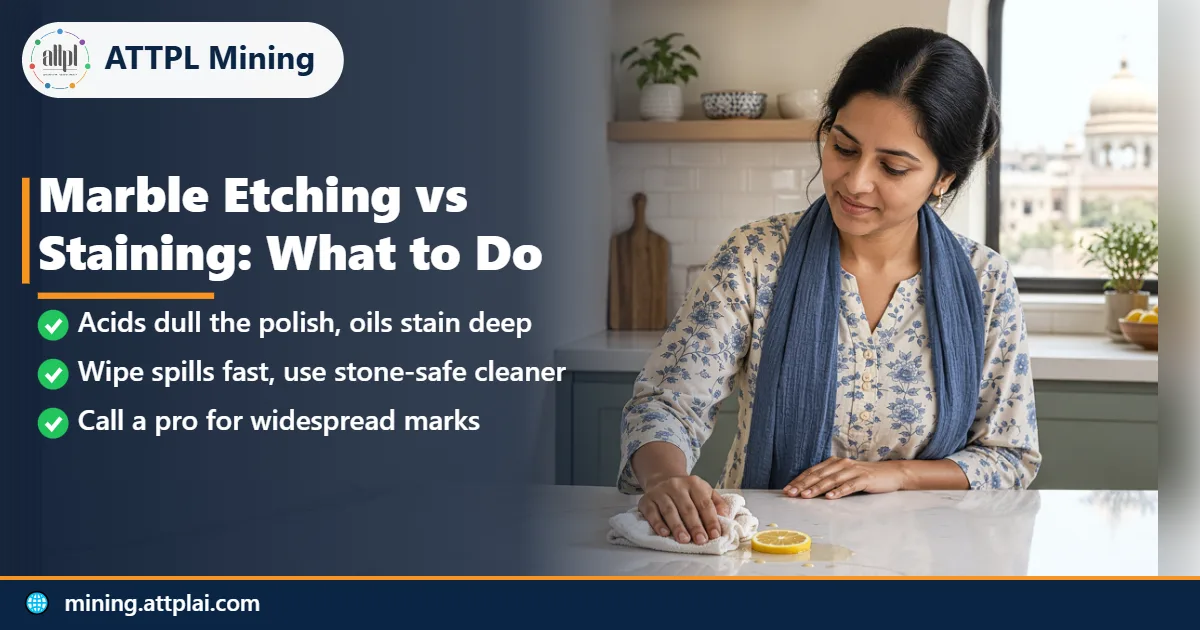
Marble is a natural stone made mainly of calcium carbonate. It is beautiful and durable, which is why Rajasthan's marble is used in homes, temples and hotels across India. But it is softer than granite and reacts with acids, so lemon juice, vinegar, some cleaners and even certain soft drinks can etch the surface. With the right routine, marble floors can look elegant for decades.
Daily and weekly cleaning
- Sweep or dust-mop daily to remove grit, which scratches the surface like sandpaper.
- Mop with clean water and a pH-neutral stone cleaner; avoid acidic or harsh chemical cleaners.
- Dry the floor after mopping to avoid water marks.
- Use doormats at entrances to trap sand and dust.
Preventing stains and etching
Wipe spills immediately, especially tea, coffee, oil, turmeric and citrus. Use coasters and trays in kitchens and dining areas. Place felt pads under furniture legs. A penetrating stone sealer, applied by professionals where suitable, can reduce absorption of stains, though it does not stop acid etching completely.
Polishing, honing and re-grinding
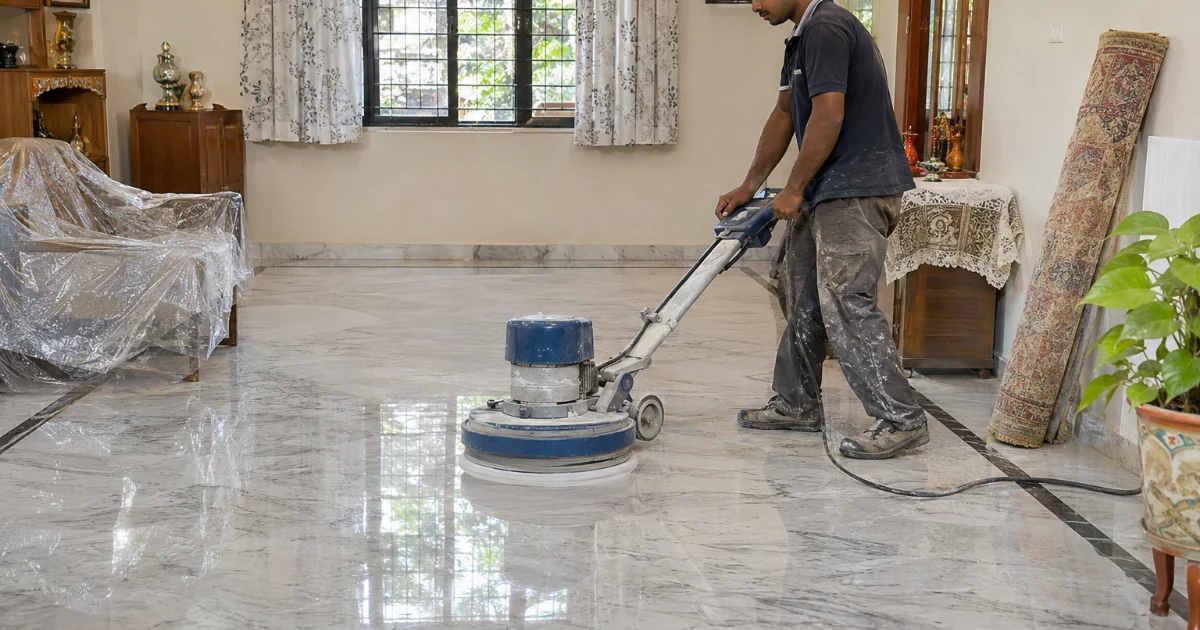
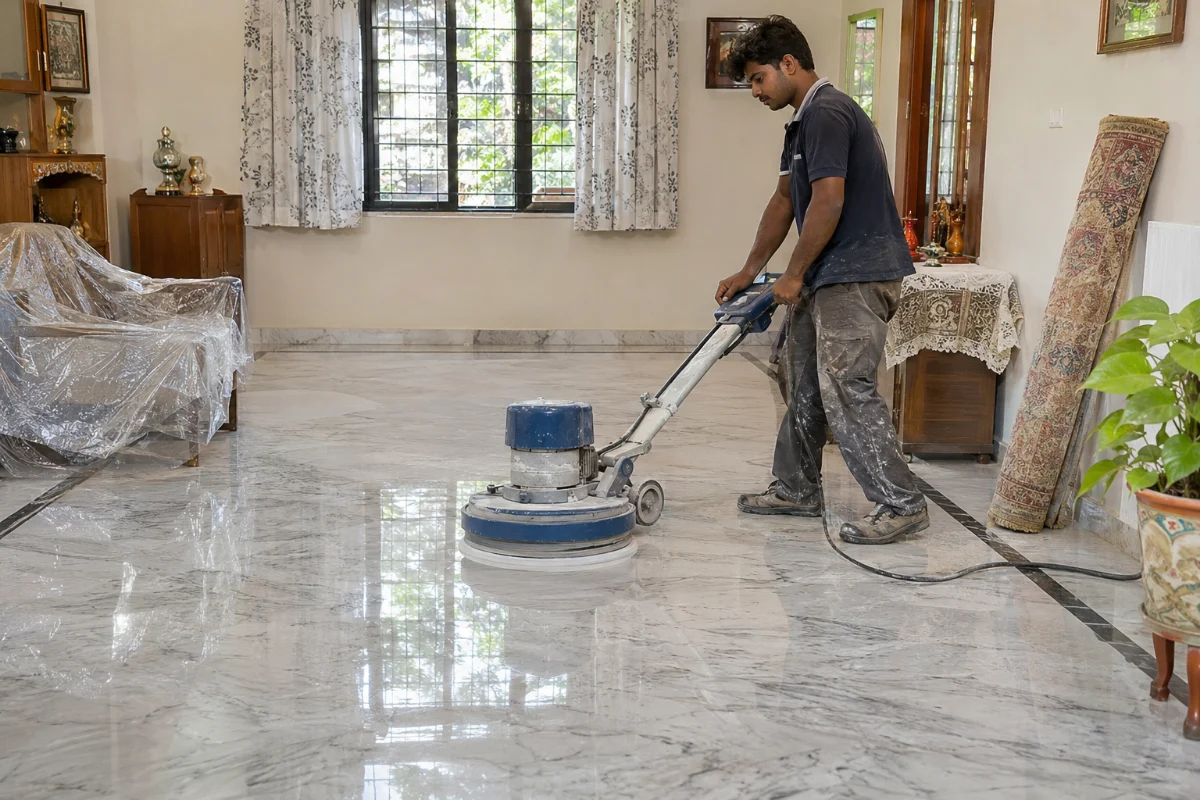
- Light polishing restores shine on a floor that has become dull with use.
- Honing removes light scratches and etch marks.
- Full re-grinding with diamond abrasives levels uneven tiles and lippage and removes deeper scratches, followed by polishing.
- Crystallisation or polishing compounds should be chosen carefully; take advice on what suits your marble.
Most homes need professional polishing every few years depending on footfall. Hire experienced teams, ask about the process and protect furniture and walls during work.
Mistakes to avoid
- Using acidic cleaners, vinegar or lemon to remove stains.
- Scrubbing with steel wool or rough pads.
- Letting water stand on the floor for long periods.
- Using wax products that make floors slippery and dull over time.
- Dragging heavy furniture across the floor.
Removing common stains safely
Different stains need different treatment. Always test any method on a small hidden area first, and when in doubt, call a stone care professional.
- Oil and grease: blot immediately; a poultice made with a suitable absorbent material can draw out oil over a day or two.
- Tea, coffee and food stains: clean with a pH-neutral cleaner; stubborn organic stains may need a poultice recommended for marble.
- Rust marks: need specialised rust removers safe for marble; avoid household acids.
- Water rings and dull spots: often etch marks that need honing and polishing rather than cleaning.
Avoid the temptation to scrub harder or try strong chemicals; that usually makes the damage worse and more expensive to repair.
Marble in bathrooms and kitchens
Bathrooms and kitchens expose marble to water, soaps, cosmetics and food acids every day. Use mats near showers, wipe splashes promptly and choose cleaners labelled safe for natural stone. In kitchens, many homeowners prefer granite for countertops and use marble for floors and walls, where it faces fewer acidic spills.
Choosing the right marble from the start
Maintenance is easier when the stone suits the space. Our Makrana marble grades guide and Rajasthan marble buying guide help you choose, and our comparison of granite vs marble flooring explains which stone fits high-traffic areas. Good installation matters too; the ATTPL Group article on marble and stone installation and care covers laying and finishing. For marble supply, contact ATTPL Mining.
Frequently asked questions
Can I use vinegar to clean marble?
No. Vinegar and other acids etch marble. Use a pH-neutral stone cleaner instead.
How often should marble floors be polished?
It depends on footfall; many homes need professional polishing every few years, with gentle daily cleaning in between.
Does sealing stop marble from staining?
A penetrating sealer reduces absorption of liquids but does not stop acid etching. Wipe spills quickly.