How granite and marble are formed
See also: Rajasthan Granite Colours and Varieties: A Buyer's Guide
See also: Buying at Kishangarh Marble Market: A Practical Guide for Buyers
Granite and marble are the two natural stones most Indian homeowners, architects and builders compare when they plan a floor. Both are beautiful and long-lasting, and Rajasthan is one of the country's leading sources of both. They behave very differently in daily use, though. This guide explains those differences in plain terms so you can pick the right stone for each space and buy it with confidence.
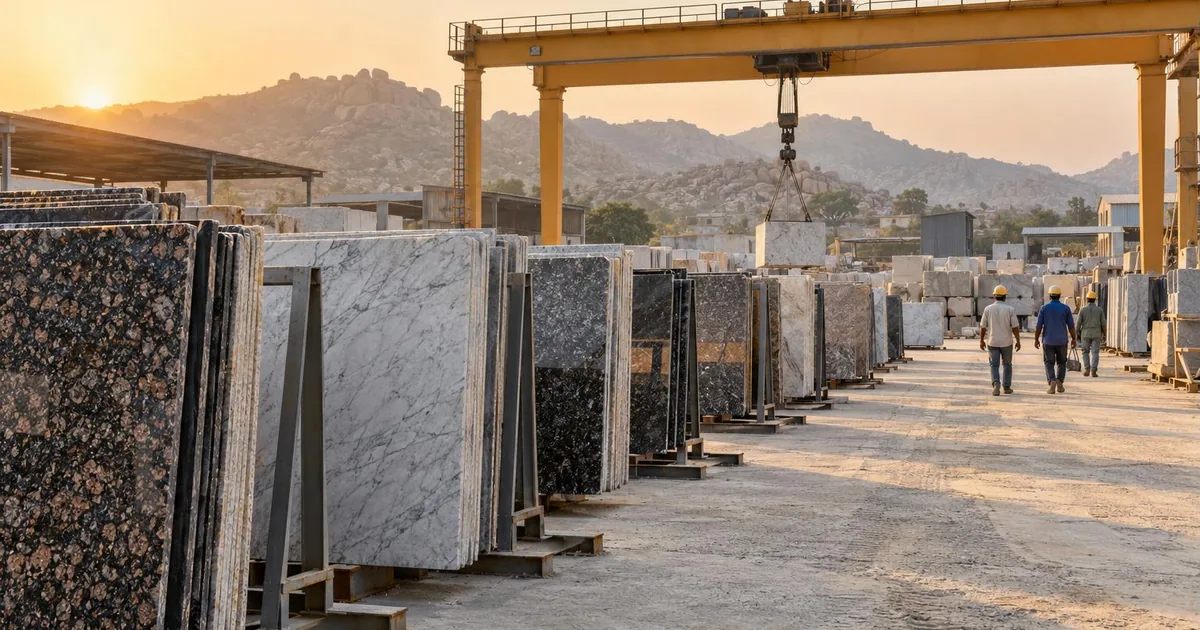
Granite is an igneous rock. It forms when molten rock cools slowly deep underground, which gives it a dense, crystalline structure made mostly of quartz and feldspar. That structure is why granite is hard and resists scratches well.
Marble is a metamorphic rock. It forms when limestone is changed by heat and pressure over a very long time. It is mostly calcite, a softer mineral, which gives marble its smooth look and soft glow, and also makes it more sensitive to scratches and acids.
Side-by-side comparison
Use this quick comparison when you shortlist stone for a project:
- Hardness: granite is harder and handles grit and heavy furniture better; marble scratches more easily and slowly loses its polish in busy areas.
- Stains and acids: marble reacts with lemon juice, vinegar, some cleaners and soft drinks, which can leave dull 'etch' marks; granite is far less reactive.
- Look: marble offers soft veining and bright whites; granite offers speckled or flowing patterns in black, grey, red, brown and other shades.
- Maintenance: both need sealing on many varieties, but marble needs more care and periodic re-polishing.
- Feel: marble stays cool underfoot and suits Indian summers; polished granite can be more slippery when wet unless a honed or flamed finish is chosen.
Where each stone works best
Marble is a strong choice for living rooms, bedrooms, puja rooms, lobbies and spaces where you want an elegant, light look and foot traffic is moderate. Many traditional Rajasthani homes and temples use white marble for exactly these reasons.
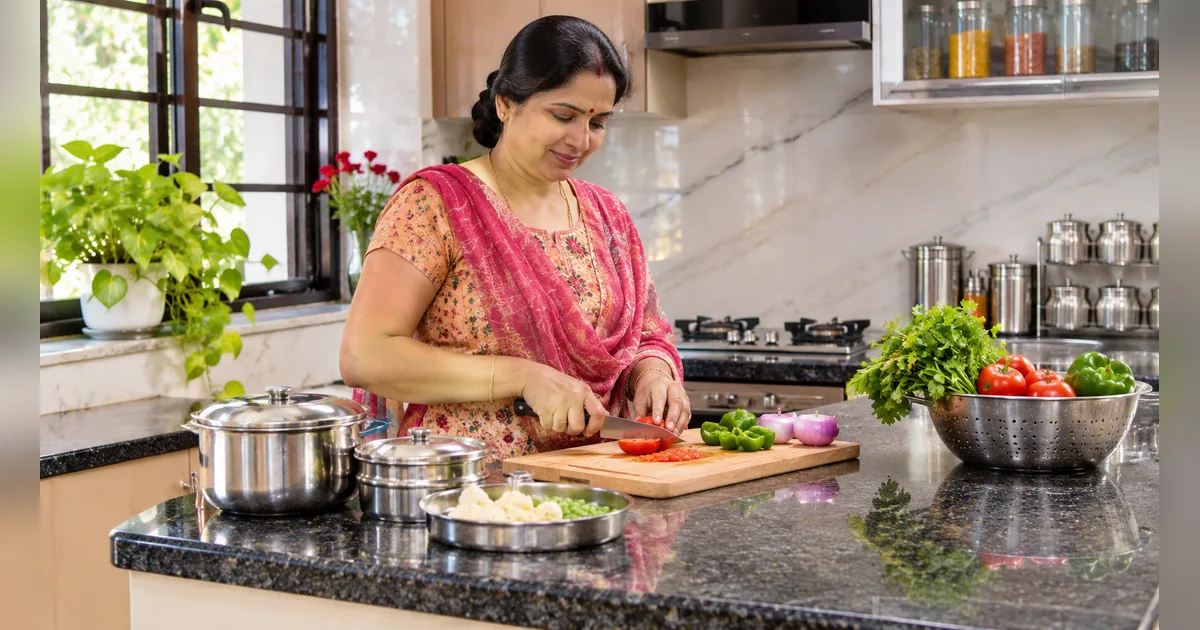
Granite suits kitchens, staircases, entrances, commercial lobbies, car porches and other high-traffic or spill-prone areas. A flamed or leather finish on granite also works well outdoors. For outdoor paving you can also consider Kota stone and sandstone, which we compare in our outdoor paving guide.
Finishes matter as much as the stone
The same slab can look and behave very differently depending on its surface finish:
- Polished: high gloss and rich colour; best indoors and in dry areas.
- Honed: matte and smooth; hides scratches better and is less slippery.
- Flamed or leather: textured and slip-resistant; good for granite on steps, wet zones and outdoors.
Ask your supplier to show the actual finish on a sample piece, under daylight and under the kind of lighting you will use at home.
What drives the price
Prices for both stones vary widely, so it is better to understand the factors than to rely on a single rate. The main drivers are the variety and its rarity, slab size and thickness, consistency of colour across the lot, the number of natural defects or repairs, the finish, and freight to your site. Large, uniform slabs from one block usually cost more, but they also reduce wastage and give a seamless floor.
Buying tips for Rajasthan buyers
- Inspect slabs in person or by video, and ask to see the full lot, not one showpiece slab.
- Check thickness at several points and look for cracks, pits, resin filling and colour patches.
- Order all slabs for one room from the same block to keep the pattern consistent.
- Add 8–10% extra for cutting and breakage, more for complex layouts.
- Plan safe packing and transport; our guide on packing and transporting marble and granite slabs explains the checks.
If you are new to marble, start with our Rajasthan marble buying guide. For installation and long-term care of natural stone at home, ATTPL Group also shares a practical natural stone buying guide.
Getting stone delivered to your site
Natural stone is heavy and fragile, so the transport partner matters. For bulk orders, ATTPL's logistics arm offers road transportation for heavy cargo across Rajasthan and India. For large construction projects that need flooring as part of a wider build, our sister company ATTPL Infra handles civil and building works.
Talk to ATTPL Mining & Minerals
ATTPL Mining & Minerals supplies marble, granite and other natural stone from Rajasthan to homeowners, builders and traders. Browse our minerals and stone range or contact our team with your room sizes, preferred colours and site location, and we will help you shortlist suitable stone.
Frequently asked questions
Is granite or marble better for an Indian kitchen floor?
Granite is usually the more practical choice for kitchens because it is harder and far less sensitive to acids such as lemon juice and vinegar.
Does marble flooring need polishing again?
Yes. In busy areas marble slowly loses its shine and may need professional re-polishing every few years, depending on use and care.
Can I use polished granite outdoors?
Polished granite can be slippery when wet. For steps, porches and outdoor areas choose a flamed, leather or honed finish.