Two different kinds of marks
Many marble owners are worried by marks on their stone, but not all marks are the same. An etch is damage to the surface, while a stain is colour that has soaked into the stone. Knowing which one you have decides how to treat it, and the wrong treatment can make it worse.
What is etching?
Marble is made mostly of calcium carbonate, which reacts with acids. When something acidic, such as lemon juice, vinegar, tamarind, soft drinks, wine or some toilet and bathroom cleaners, touches a polished marble surface, it slightly dissolves the polish. The result is a dull, light or whitish patch, usually with the shape of the spill or drop.
- It feels slightly rough or looks like a dull ring
- It is lighter than the surrounding polish, not darker
- It is more visible on dark, polished marble
- It cannot be wiped away, because the surface itself has changed
What is staining?
A stain appears when oil, tea, coffee, turmeric, wine, ink, rust or other coloured liquids soak into the pores of the stone. The surface polish is usually intact, but the area looks darker or coloured.
- Oil stains look dark and spread slowly
- Organic stains from tea, coffee and food can be pink, brown or yellow
- Rust stains are orange or brown, often near metal items
- Stains can sometimes be lifted with a suitable poultice made for stone
Sealing helps to reduce stains, see our marble sealing and stain protection guide.
What to do right away
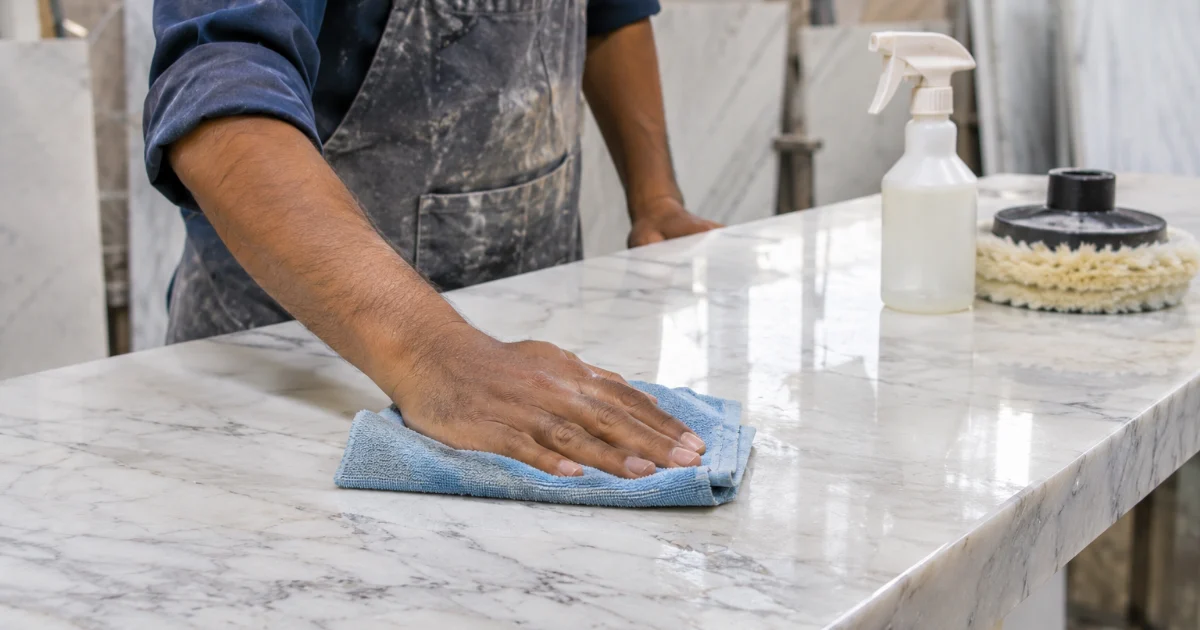
- Wipe spills at once with a soft, damp cloth, then dry the surface. Do not rub hard
- Use mild soap or a pH-neutral stone cleaner, never acidic cleaners, bleach or harsh bathroom products
- Use coasters, trays and chopping boards in the kitchen, and hold-ups for bottles in the bathroom
- For light etching, a stone care professional can re-polish the spot
- For stubborn stains, ask the supplier or a stone care expert about a poultice, and test on a hidden area first
Prevention is easier than repair
Choose the right stone and finish for the room. In busy kitchens, a honed finish or a harder stone such as granite can hide marks better. See our guides on granite versus marble flooring and marble polishing and maintenance. Reseal as advised by your supplier.
When to call a professional
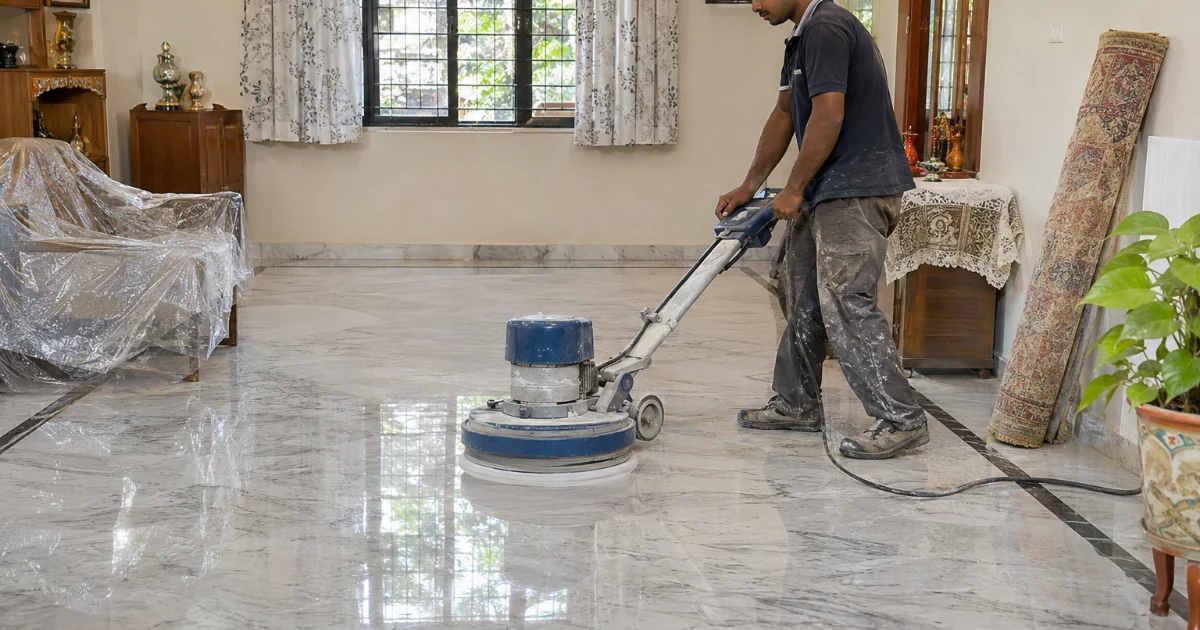
If marks are widespread, deep or on a large floor, call a stone restoration professional. They can hone and re-polish the stone, which removes etching and shallow marks. Avoid do-it-yourself acid treatments, since they can cause more etching.
Frequently asked questions
Can I use lemon or vinegar to clean marble?
No. These are acidic and can etch the polished surface. Use a pH-neutral stone cleaner.
Does sealing stop etching?
A sealer helps against stains, but it does not fully protect marble from acid etching. Wipe spills quickly.
Are all natural stones affected by acids?
No. Granite and quartzite are generally more resistant than marble, but each stone is different. Ask your supplier.
Sources and further reading
This article is general information for owners and buyers. Results depend on the stone, finish and the product used, so test on a hidden area and take advice from your supplier or a stone care professional.