Slabs, tiles and cut-to-size pieces
Natural stone is sold in three main forms. Slabs are large, thin pieces cut from a block, tiles are smaller, uniform pieces, and cut-to-size pieces are made to your measurements for steps, counters and special areas. The sizes vary by stone, quarry and factory, so always confirm the exact dimensions with your supplier.
Typical sizes
These are common ranges and not fixed rules.
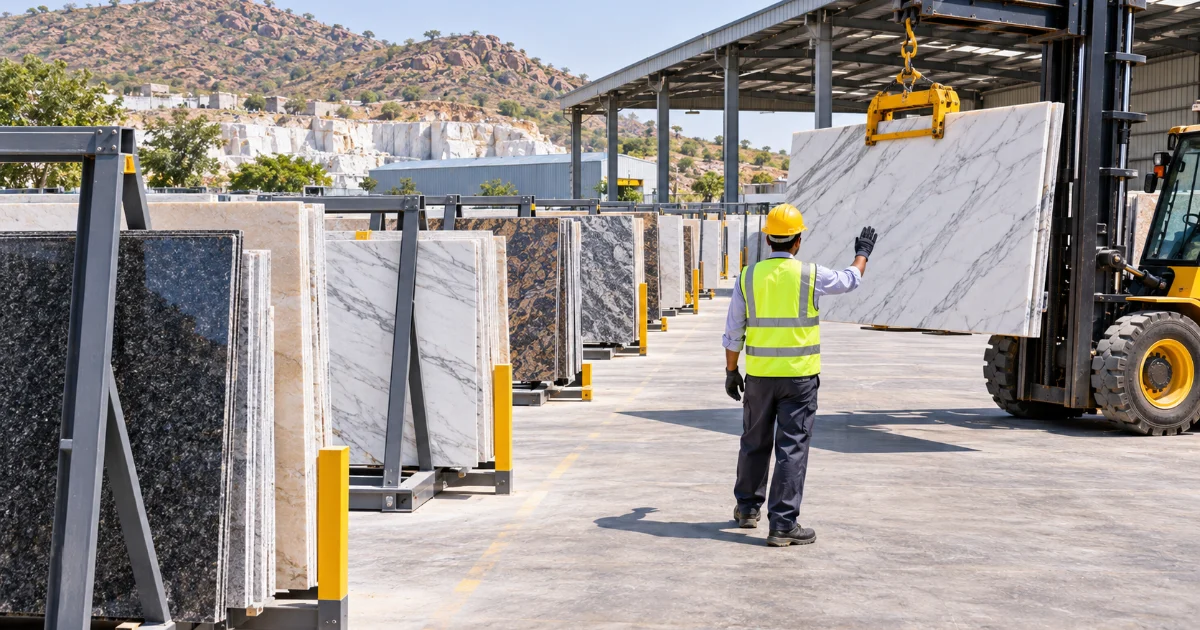
- Marble and granite slabs: often several feet long and wide, with the exact length and width depending on the block. Many slabs are around two to three metres in length
- Floor tiles: commonly in squares and rectangles such as 600 by 600 mm, 600 by 300 mm and larger formats
- Wall tiles and cladding: smaller or thinner pieces, depending on the fixing method
- Sandstone: often supplied as tiles, paving slabs, cobbles and cut-to-size pieces, with varied sizes by quarry
For outdoor paving options see our guides on Kota stone, sandstone and granite paving and Rajasthan sandstone types and finishes.
Choosing the thickness
- Thin tiles are used for walls and for floors with light foot traffic
- Floors with heavy traffic, driveways and public areas need thicker stone and a good base
- Countertops are usually made from slabs of a thickness that suits the stone and the support, see the countertop thickness guide
- Steps and risers have their own typical thicknesses, as in our staircase guide
- Thicker stone is heavier, so check the load on floors and the transport plan
Plan the layout to save stone
Measure the area carefully and draw a layout. Choose sizes that fit the room with fewer cuts, and keep the joints in the best places. Place the order with a little extra for cutting and breakage, using the method in our quantity and wastage guide. If you are installing, follow the steps in the flooring installation guide.
Check before you accept the material
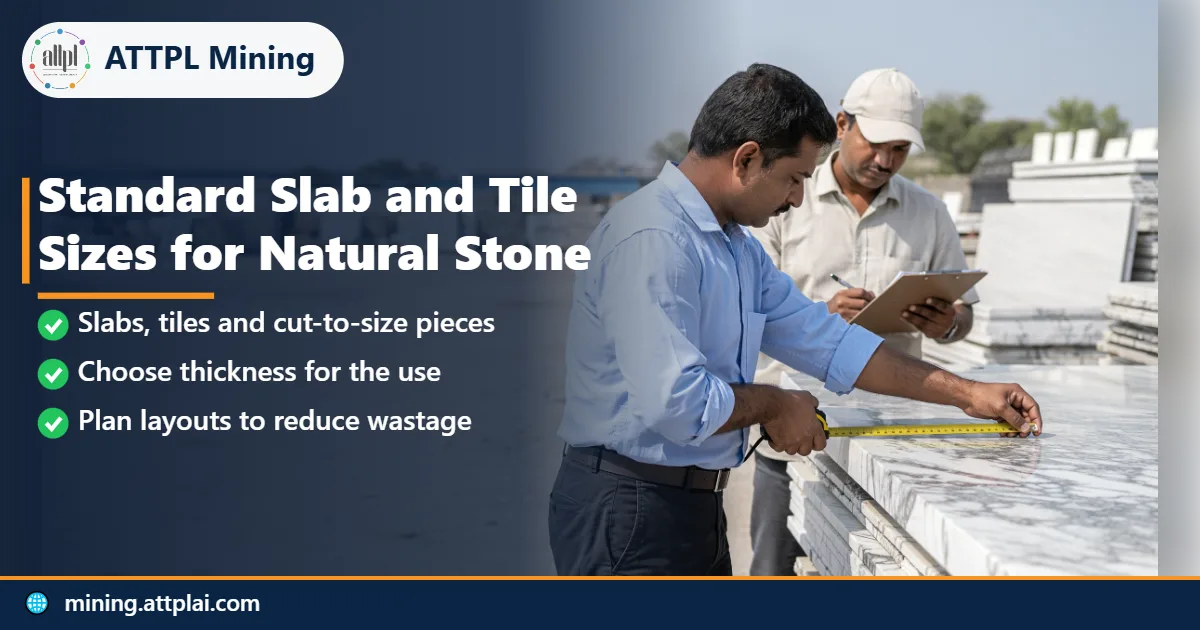
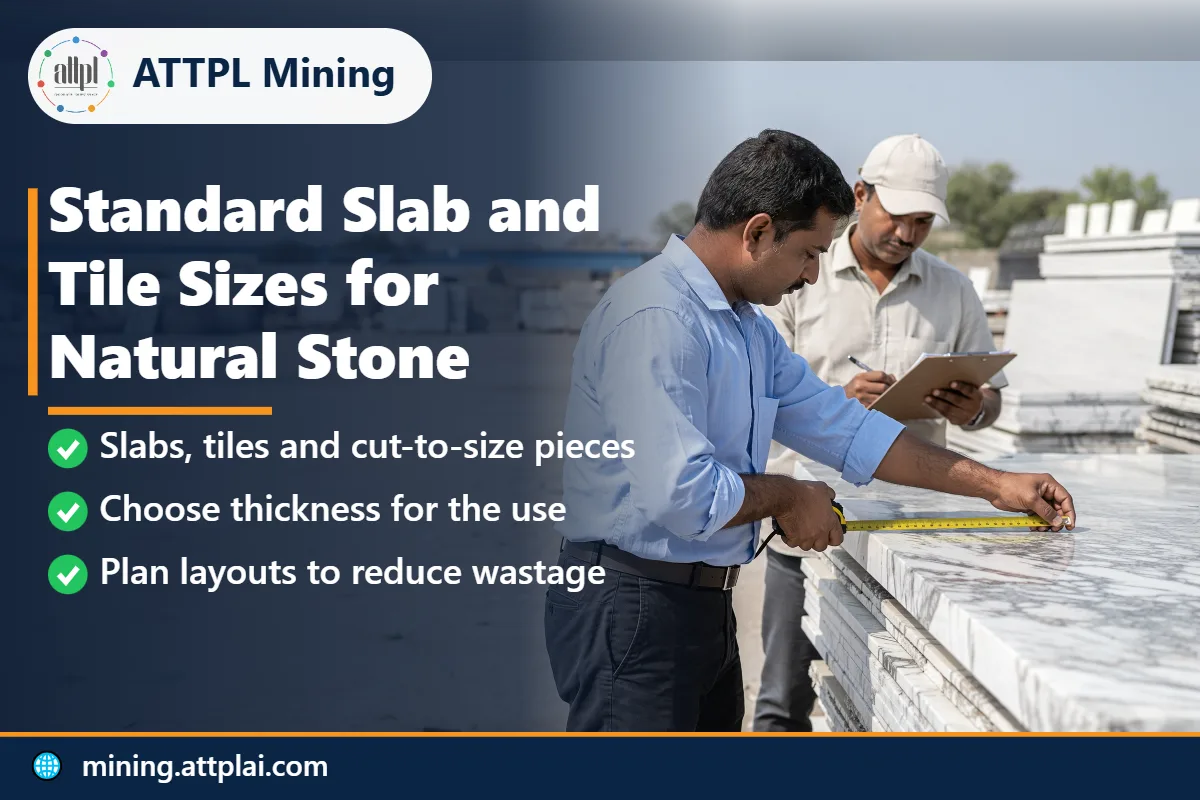
- Measure a sample of tiles for length, width and thickness, and check that sizes are consistent
- Check for cracks, chips, colour variation and uneven polish
- Match the delivered material with the approved sample
- Keep all pieces from the same lot together to reduce shade differences
- Store and handle slabs carefully, as explained in the slab yard handling guide
Write sizes in your order
State the stone name, finish, thickness, length, width and quantity in the written order, and agree on the tolerance for size and thickness. This avoids disputes at delivery and helps your supplier prepare the right pieces.
Frequently asked questions
Are marble and granite slab sizes the same everywhere?
No. Sizes depend on the block and the factory. Ask your supplier for the available sizes for the stone you like.
Why do stone tiles vary slightly in size?
Natural stone and cutting machines have small tolerances. Agree on an acceptable range before the order.
How much extra stone should I order?
It depends on the layout and the stone. Use a wastage estimate for your design, and ask your supplier for advice.
Sources and further reading
This article is general information for buyers. Available sizes and thicknesses vary by supplier and stone, so confirm them in writing before ordering.