Why stone cladding is popular
See also: Stone Jali Screens: A Buyer's Guide to Carved Sandstone and Marble Lattice
Natural stone cladding gives a building a solid, timeless look while protecting the wall behind it from sun and rain. Rajasthan is one of India's main sources of cladding stone — sandstone from areas around Jodhpur, Dholpur and Bundi, granite from several districts, and marble from Makrana and Rajsamand. Used well, stone cladding lasts for decades with little maintenance. Used badly, it can stain, crack or even fall off the wall.
This guide explains how to choose the stone, the right thickness and finish, and the fixing method that suits your building.
Choosing the stone
- Sandstone: warm colours, natural texture and easy to work; good for exterior walls and boundary walls, but more porous, so sealing matters.
- Granite: very hard and weather-resistant; ideal for high-traffic areas, plinths and modern facades.
- Slate and quartzite: layered, rustic look for feature walls and landscaping.
- Marble: elegant for interiors and protected exterior areas; softer and sensitive to acid rain and pollution.
Look at full-size samples in daylight, because natural stone varies from block to block. Our Kota stone, sandstone and granite guide compares these stones for outdoor use.
Thickness, size and finish
Thicker panels are stronger but heavier, which increases the load on the wall and the fixing system. Large panels look seamless but need precise handling and stronger anchors. Common finishes include natural cleft, honed, flamed, sand-blasted and polished. Rough finishes hide dust and weathering better on exteriors, while polished stone suits interiors and lobbies.
- Confirm the thickness tolerance and edge finish with the supplier before ordering.
- Order extra quantity from the same lot for cutting waste and future repairs.
- Check panels on arrival for cracks, resin fills and colour mismatch; see our marble slab inspection checklist.
Wet fixing vs dry fixing
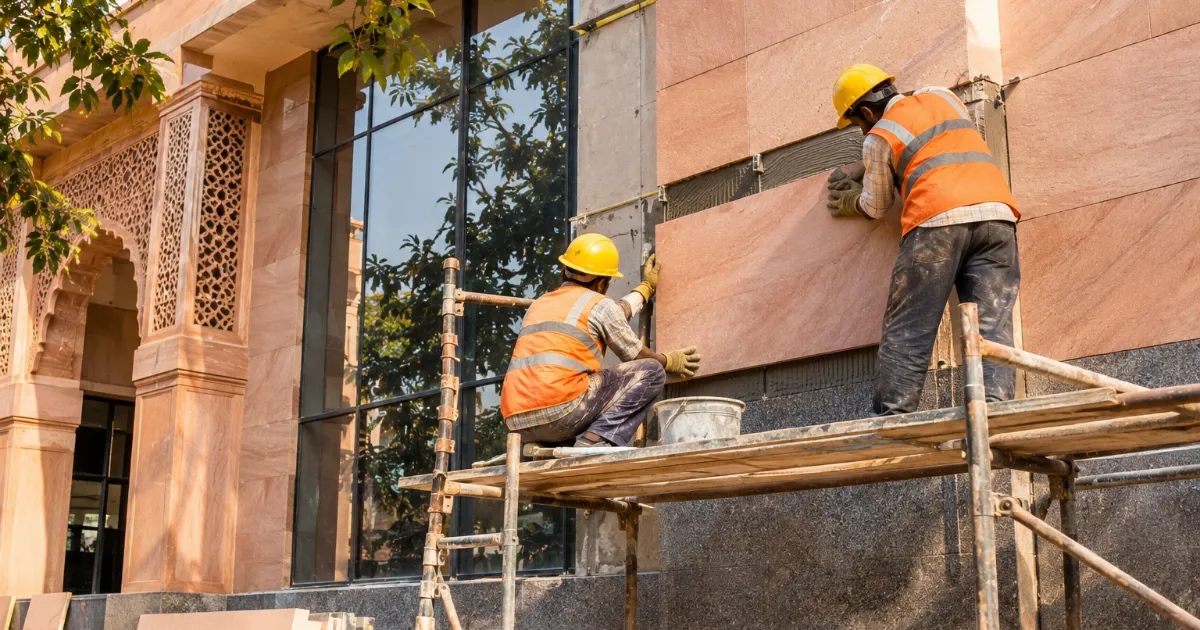
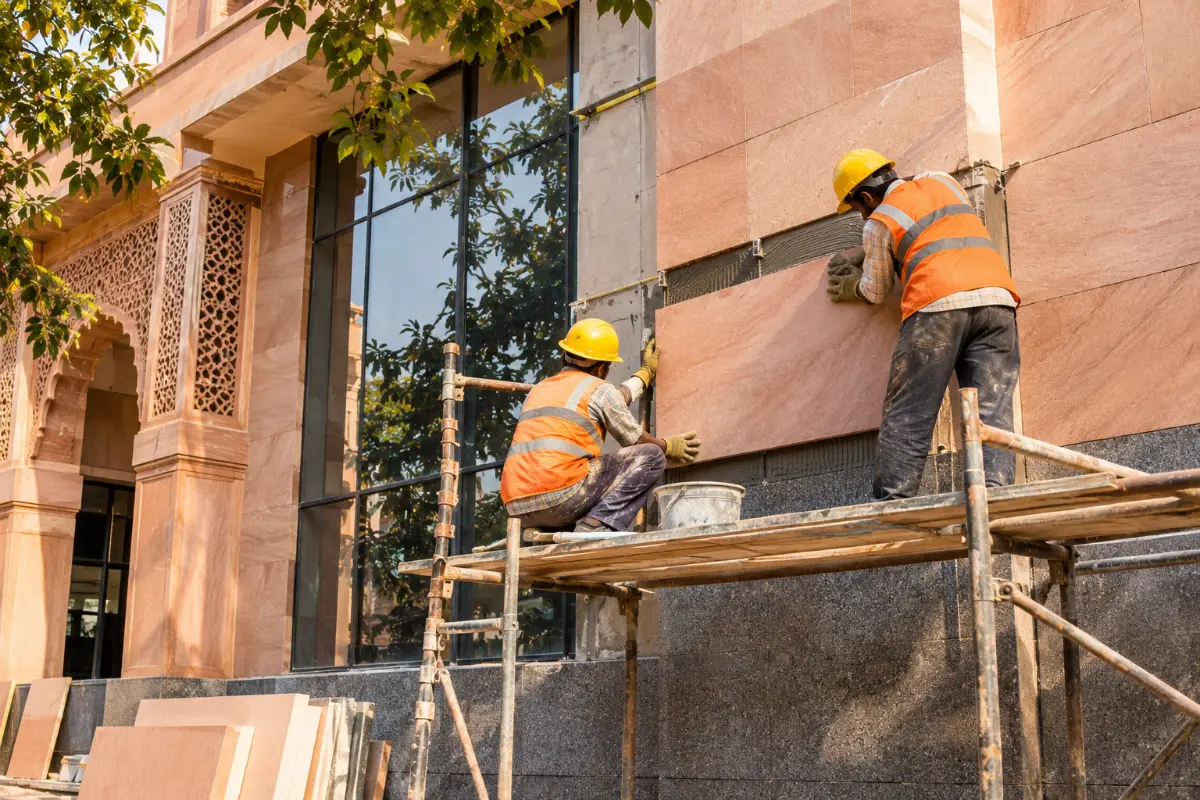
In wet fixing, stone is fixed to the wall with mortar or adhesive. It is common for low-rise buildings and small panels, and is economical. Dry fixing (mechanical fixing) uses stainless steel anchors, clamps or a frame to hold each panel, with a gap behind the stone for ventilation. Dry fixing is recommended for tall facades, heavy or large panels and places where safety is critical, because it does not depend only on adhesion.
- Use stainless steel anchors and fittings — ordinary steel rusts and stains the stone.
- Leave expansion joints and seal them with suitable sealants.
- Get facade designs for multi-storey buildings checked by a structural engineer.
Building and facade works can be planned with ATTPL Infra, and installation and care of marble and stone in interiors is covered in the ATTPL Group guide to stone installation and care.
Sealing and maintenance
Porous stones such as sandstone benefit from a penetrating sealer that reduces water absorption and staining, without making the surface glossy. Clean cladding with water and mild, pH-neutral cleaners; avoid acids and high-pressure washing that can damage the surface or joints. Inspect joints and anchors periodically, especially after heavy monsoon seasons.
Common cladding mistakes
Most cladding failures trace back to a handful of avoidable mistakes. Panels fixed with only cement mortar on tall walls, ordinary steel clamps that rust and stain, no expansion joints on long elevations, and porous stone left unsealed in rain-exposed areas are the most frequent. Poor surface preparation of the wall — dust, loose plaster or damp patches — also weakens adhesion.
- Skipping a mock-up panel to check colour, joints and fixing before full installation.
- Mixing stone from different lots on the same elevation.
- Using acidic cleaners after installation to remove cement marks.
A small mock-up and a clear method statement agreed with the contractor prevent most of these problems.
Buying and transport tips
- Buy from verified suppliers with clear invoices and transit documents; see our supplier verification checklist.
- Ensure panels are packed in crates with spacers; our slab packing and transport guide explains how.
- Plan delivery to site so that panels are not stored in mud or direct contact with cement bags.
Bulk stone movement across Rajasthan can be arranged through ATTPL Fleet. To source cladding stone, contact ATTPL Mining.
Frequently asked questions
Which stone is best for exterior wall cladding?
Granite and dense sandstone are popular for exteriors because they resist weathering well. The right choice depends on design, budget and climate.
What is dry fixing of stone cladding?
A mechanical method that holds each stone panel with stainless steel anchors or a frame, leaving a ventilated gap behind it. It is preferred for tall or heavy facades.
Does stone cladding need sealing?
Porous stones such as sandstone benefit from a penetrating sealer to reduce water absorption and staining. Dense granite usually needs little.