Why inspection matters
See also: Marble Flooring Installation: Subfloor, Adhesive, Spacing and Grouting Explained
Marble is a natural material, and no two slabs are identical. Variation is part of its beauty, but some differences are defects that affect strength, appearance or price. Many buyers discover problems only after the slabs reach site — or worse, after installation. A careful inspection at the yard, before payment and dispatch, avoids costly disputes.
Whether you are buying Makrana white for a home or imported-look varieties for a hotel, the same basic checks apply. Our Makrana marble grades guide explains grading, and the Rajasthan marble buying guide covers varieties and pricing factors.
Inspect in the right conditions
- View slabs in good natural light, standing upright, not stacked flat.
- Wet the surface of unpolished slabs to see the true colour and veining.
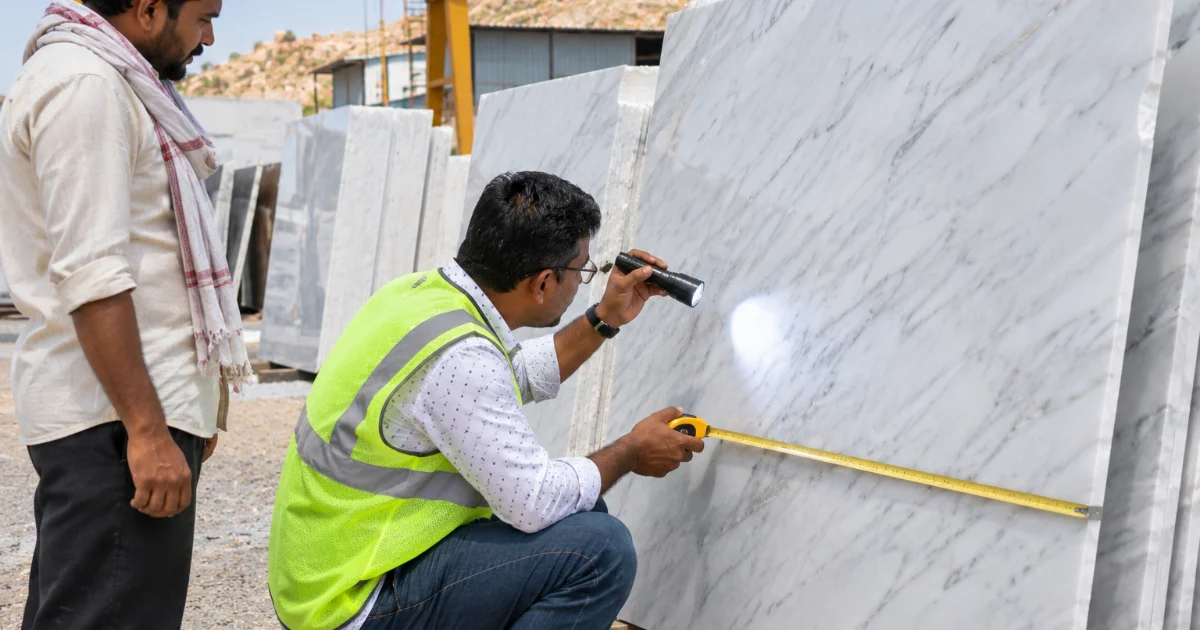
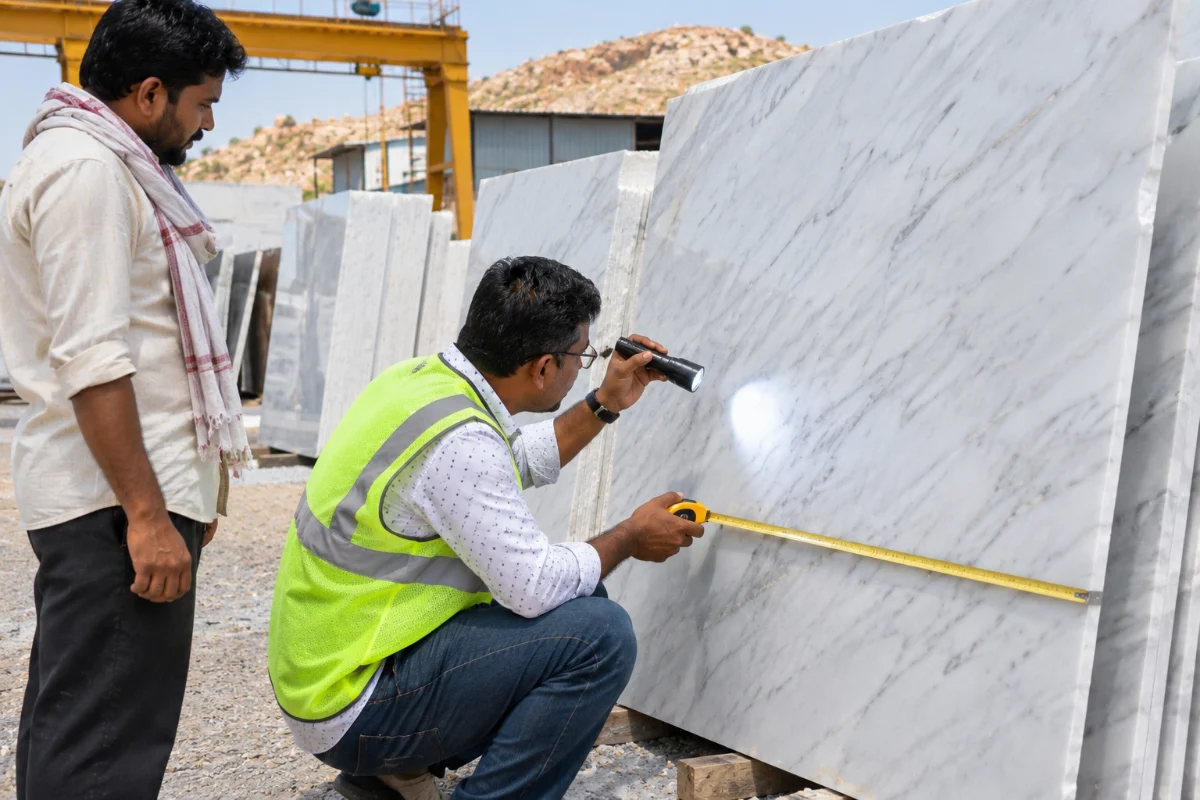
- Carry a torch to shine at a low angle across the surface to reveal cracks and polish defects.
- Use a measuring tape and, if possible, a thickness gauge.
Defects to look for
- Cracks and hairline fractures: run a fingernail along suspicious lines; open cracks catch the nail.
- Resin and filler patches: some resin treatment is normal for many marbles, but large or poorly matched fills reduce quality.
- Pits, holes and chipped edges, especially at corners.
- Rust spots or dark mineral stains that may spread when exposed to water.
- Uneven polish, dull patches or wave marks visible under angled light.
- Thickness variation across the slab beyond the agreed tolerance.
Colour, veining and lot matching
For large areas, slabs should come from the same block or lot so that colour and veining look consistent. Ask the supplier to show the full lot, number the slabs and keep them together for you. For book-matched designs, check that consecutive slabs mirror each other. Photograph each selected slab with its number so that the same slabs are dispatched.
Size, quantity and wastage
Measure usable size, not just the gross size, because edges may be chipped or uneven. Add wastage for cutting — typically more for complex layouts and patterns — and order a few extra pieces from the same lot for future repairs. Confirm whether the price is per square foot of gross or net area.
Questions to ask the supplier
A short conversation before selection reveals a lot about quality and reliability. Ask where the block was quarried, whether the slabs are resin-treated and with what, and whether the full quantity is available from one lot. Ask about the thickness tolerance and how the supplier handles slabs that break or are found defective on arrival.
- Is the full quantity available from the same block or lot?
- What is the agreed thickness and its tolerance?
- Which slabs are resin-treated or meshed at the back?
- What is the replacement policy for damage in transit?
- Can numbered slabs be reserved until payment and dispatch?
Write the answers into the purchase order. Clear terms on quality, quantity and replacement prevent most disputes after delivery.
Paperwork and dispatch
- Get a proper tax invoice with stone name, size, thickness and quantity.
- Ensure valid transit documents for the movement of stone.
- Agree packing in crates with spacers and edge protection; see our slab packing and transport guide.
- Inspect again on arrival before signing the delivery receipt.
For legal agreements with suppliers or disputes over quality, ATTPL Legal can help. Installation in interiors is covered by the ATTPL Group article on marble and stone installation and care, and trucks for slab transport across Rajasthan are available from ATTPL Fleet. To buy inspected marble, contact ATTPL Mining.
Frequently asked questions
Is resin treatment in marble a defect?
Not necessarily. Many marbles are resin-treated to fill natural pores. Large, poorly matched or excessive fills, however, reduce quality and price.
How do I check marble for cracks?
Look under angled light with a torch and run a fingernail along suspicious lines. Open cracks catch the nail; natural veins usually do not.
Why should slabs come from the same lot?
Slabs from the same block have more consistent colour and veining, which gives a uniform look across a floor or wall.