Common varieties
See also: Sandstone Cobbles and Setts for Paving: A Buyer's Guide
Rajasthan is one of India's best-known sources of sandstone, used for centuries in forts, temples and homes. Today it is widely used for paving, cladding, landscaping and carving.
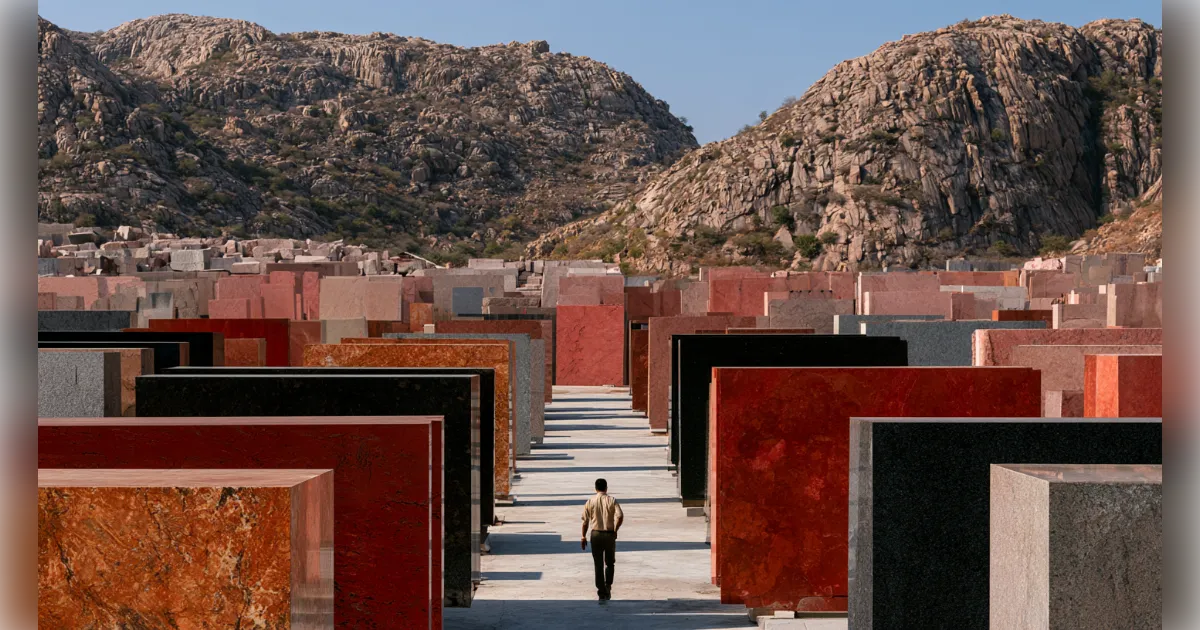
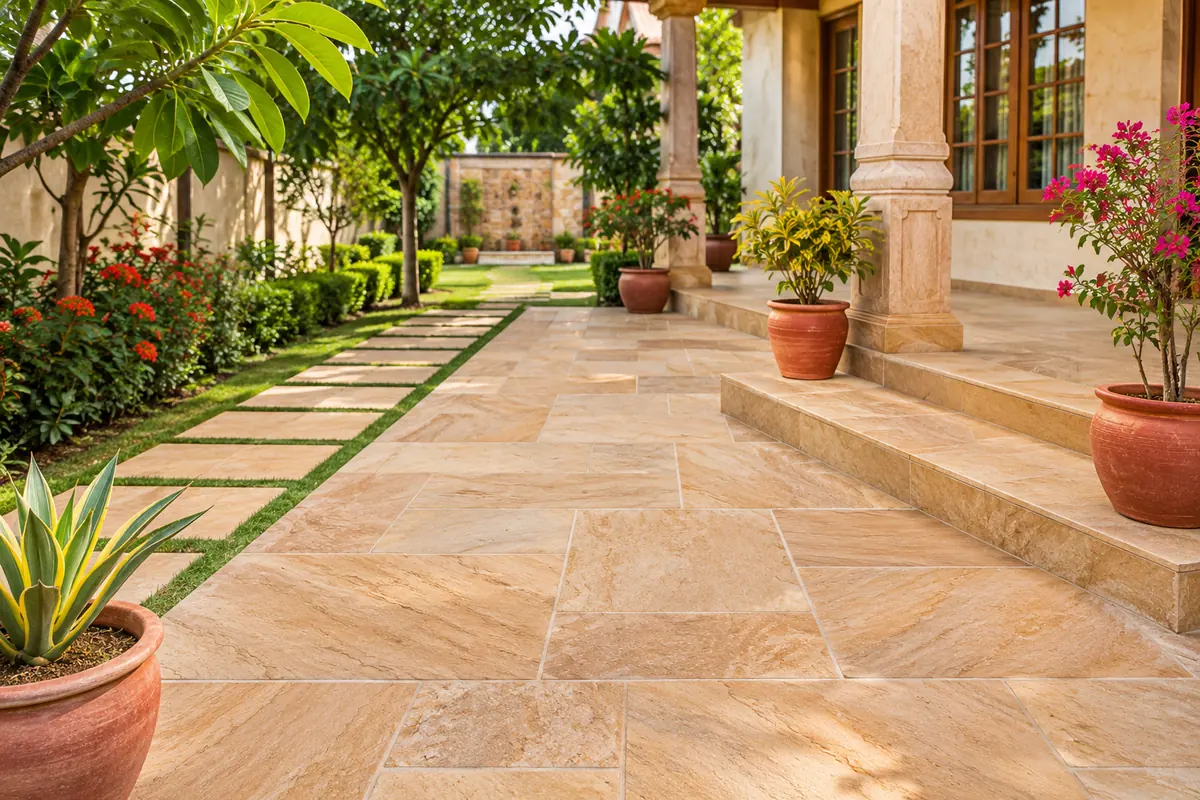
Rajasthan sandstone comes in many shades depending on the deposit. Buyers often see beige and cream stones from the Dholpur and Karauli regions, the pinkish-red tones associated with Bansi Paharpur and Karauli, and yellow and brown shades from the Jodhpur and Jaisalmer belts. Trade names vary between suppliers, so always judge by samples rather than names alone.
Surface finishes and their uses
- Natural or hand-cut: rustic texture, good grip for outdoor paving
- Sawn or machine-cut: uniform thickness, clean edges
- Honed: smooth, matte surface for indoor floors and walls
- Sandblasted or tumbled: slip-resistant, aged look for gardens and pool surrounds
- Bush-hammered or flamed: textured finish for steps and driveways
For outdoor surfaces that get wet, choose a textured finish for slip resistance. Compare options in our outdoor paving guide.
Thickness and sizes
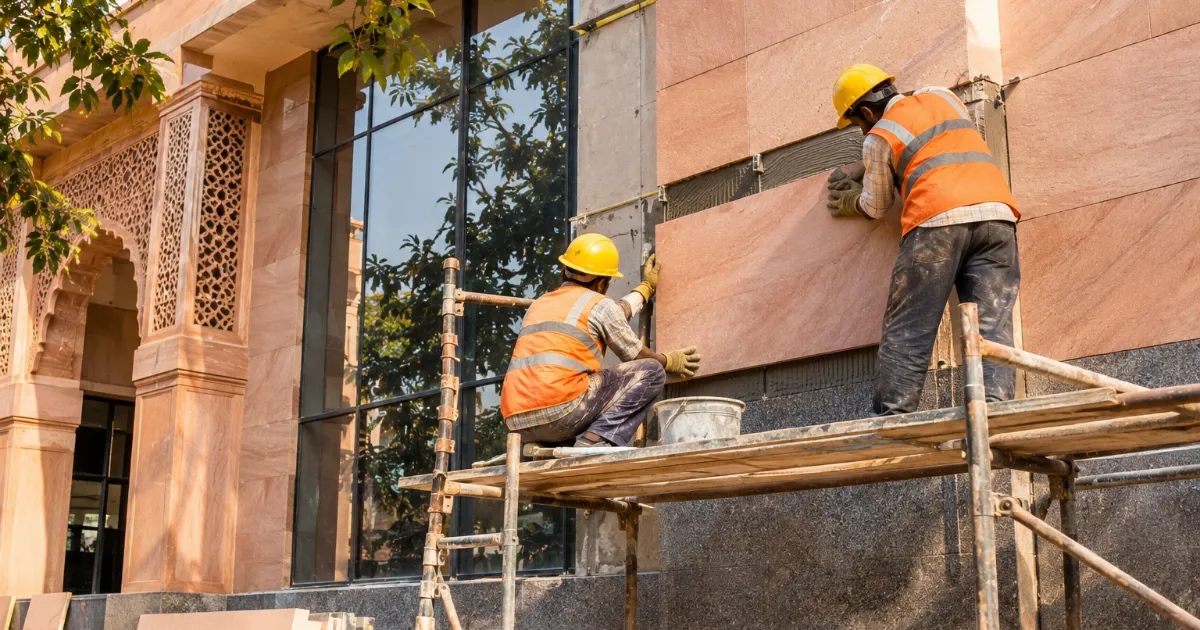
Thinner sizes are typically used for wall cladding, while paving and driveways need thicker stone laid on a proper base. Agree tolerances for thickness and size, especially for calibrated stone. For cladding methods and fixing, see our natural stone wall cladding guide.
Quality checks before you order
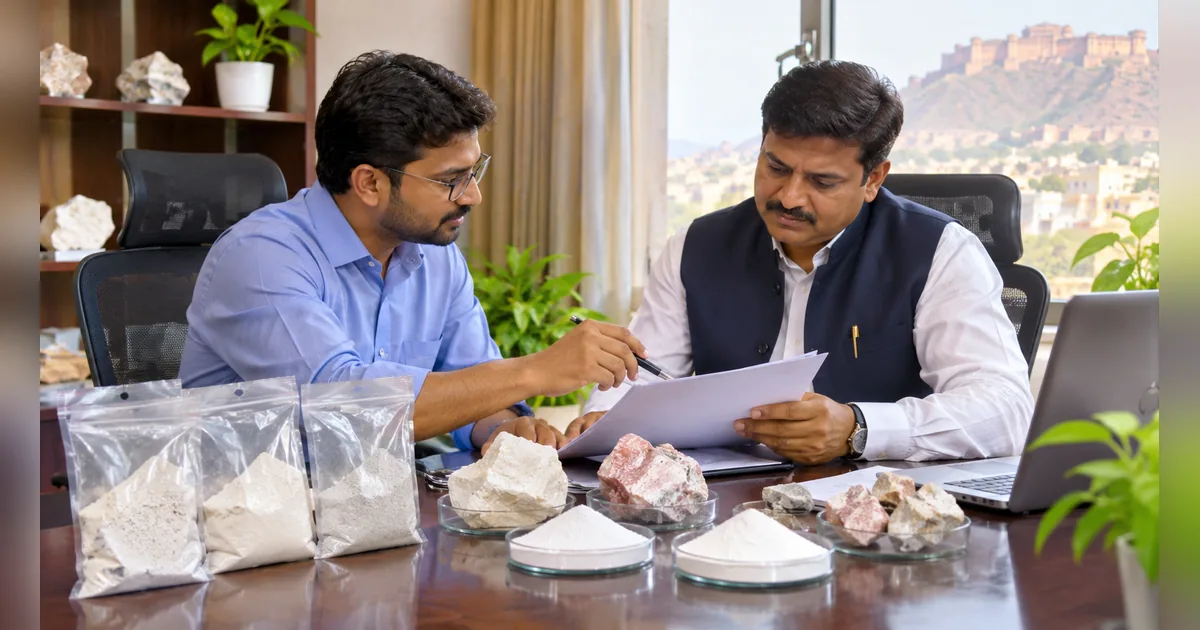
- Inspect samples in daylight, wet and dry, to see the true colour
- Check for cracks, open veins, loose layers and excessive iron spots
- Ask about water absorption and strength test results where the project needs them
- Order all stone for one area from the same lot to keep colour consistent
- Confirm packing in wooden crates to avoid edge damage
Care and sealing
Sandstone is porous and can absorb stains and moisture. A suitable penetrating sealer reduces staining and algae on outdoor areas; reapply as recommended. Clean with neutral cleaners and avoid strong acids that can damage the surface.
Source with confidence
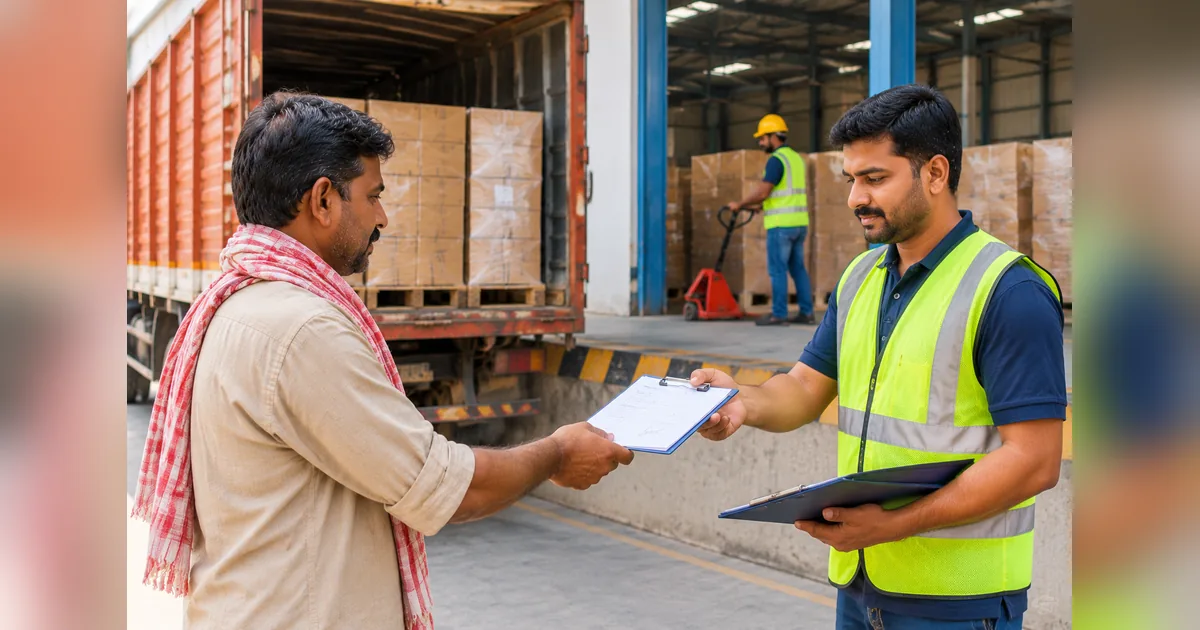
ATTPL Mining & Minerals connects buyers with Rajasthan stone suppliers and helps with sampling and dispatch. Large consignments can be moved with ATTPL Fleet, and project buyers can review our supplier verification checklist.
Frequently asked questions
Is sandstone good for outdoor paving?
Yes, when you choose a textured, slip-resistant finish, adequate thickness and a proper base.
Does sandstone need sealing?
It is porous, so a penetrating sealer helps reduce staining and moisture, especially outdoors.
Why does sandstone colour vary between batches?
It is a natural stone; colour varies with the deposit and layer. Order each area from one lot.
Sources and further reading
This article is general information for buyers and industry users. Specifications vary by deposit and processor; always test samples and confirm requirements for your application.