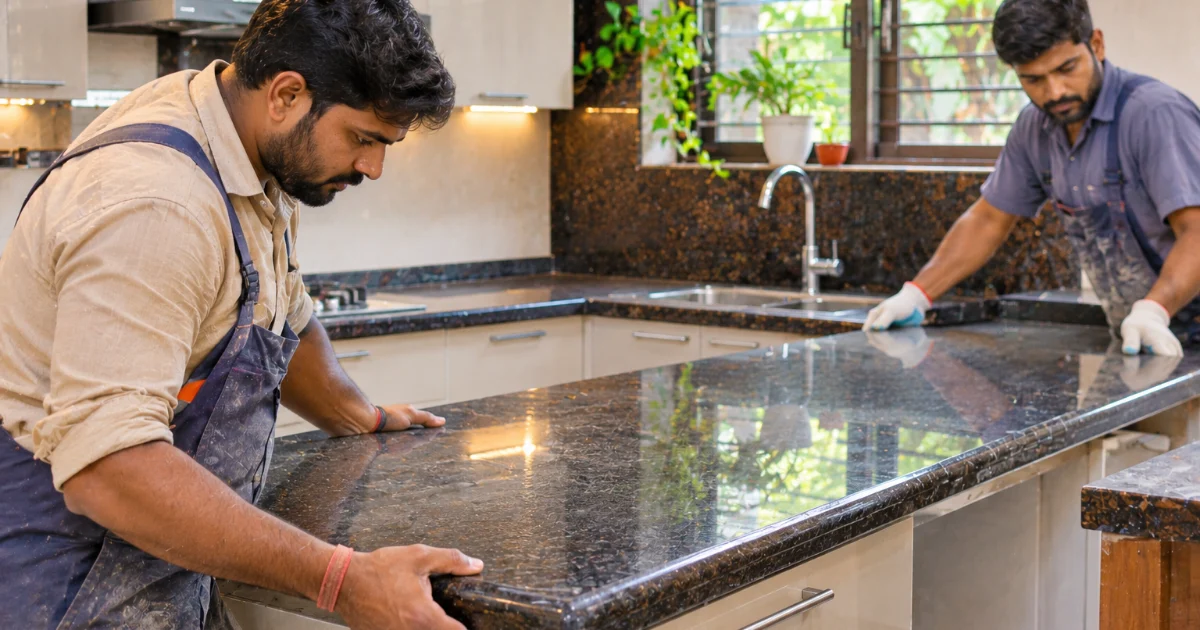
Why granite suits kitchens
See also: Stone Door Frames, Window Sills and Thresholds: A Buyer's Guide
See also: Natural Stone vs Engineered Quartz Countertops: How to Choose for Your Kitchen
See also: How to Calculate Marble and Granite Quantity for Your Project, Including Wastage
Granite is a hard, dense igneous stone that resists heat, scratches and everyday wear, which makes it a popular choice for kitchen countertops in Indian homes. It comes in many colours — from black and grey to reds, browns and patterned varieties — and can be finished in different ways. Choosing the right slab and details avoids problems later.
Slab thickness
- Thinner slabs are lighter and cost less but need good support and careful handling.
- Thicker slabs feel more solid and are less prone to cracking over cabinets and cut-outs.
- A thicker look can be created by laminating an extra strip along the edge.
Ask your supplier about the actual thickness tolerance and check slabs for cracks, resin fills and colour variation before cutting.
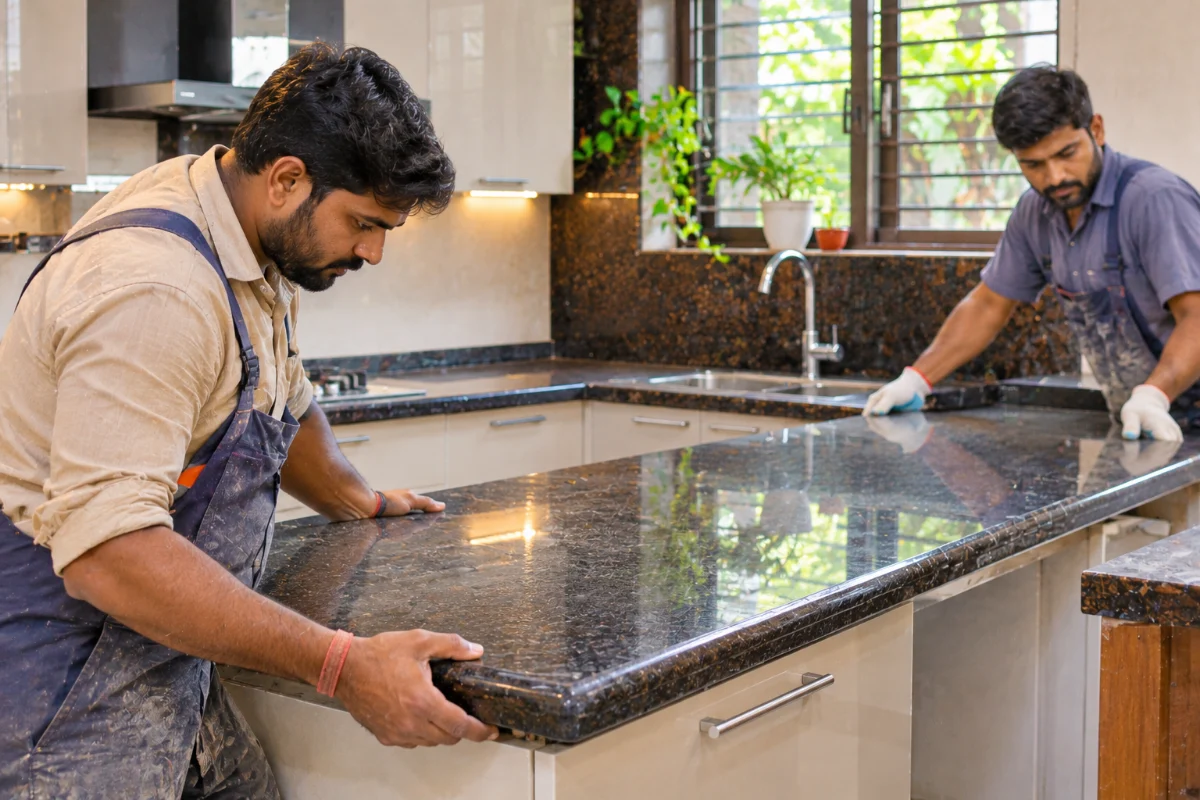
Finishes
- Polished: glossy, shows colour and pattern best, easy to clean.
- Honed: matte and smooth; shows fingerprints and stains more easily on dark stones.
- Leather or brushed: textured, hides smudges and gives a natural look.
- Flamed: rough texture, more suited to outdoor or flooring uses than countertops.
Edge profiles and details
Common edges include straight with eased corners, half bullnose, full bullnose and bevelled. Rounded edges are safer in homes with children and chip less. Plan cut-outs for sinks and hobs carefully, with reinforcement where needed, and place joints away from heat sources and high-stress areas.
Choosing colour and pattern
Colour affects more than looks. Dark polished granites show water spots and fingerprints more easily, while speckled mid-tone stones hide crumbs and marks well. Light granites can brighten a small kitchen but may need sealing. Strongly veined or patterned granites look best when slabs are matched at joints, which requires planning the layout before cutting.
Always view the actual slabs rather than a small sample, because natural stone varies from block to block. Ask the supplier to keep slabs from the same block for your project and to show you where joints will fall.
Common mistakes to avoid
- Choosing a slab only from a small sample piece.
- Ignoring the weight and support needed for thick slabs and overhangs.
- Placing joints next to the sink or hob.
- Skipping a final inspection before the installer leaves.
- Using harsh cleaners that dull the finish over time.
Installation and care
- Ensure cabinets are level and strong enough to carry the stone.
- Use proper adhesives and fill joints neatly.
- Seal granite where advised, especially lighter, more porous varieties.
- Clean with mild soap and water; avoid harsh chemicals.
- Use trivets and cutting boards to protect the finish.
If you are comparing stones for floors as well, read our granite vs marble flooring guide and the slab packing and transport guide. For interior projects needing civil and electrical work, ATTPL Infra can help. To source granite slabs, contact ATTPL Mining.
Frequently asked questions
Is granite heat resistant?
Granite tolerates heat well, but sudden extreme temperature changes can stress the stone. Use trivets under very hot pans.
Which granite finish is easiest to maintain?
Polished granite is generally easiest to clean; leather finishes hide fingerprints and smudges well.
Does granite need sealing?
Some lighter, more porous granites benefit from sealing; dense dark granites often need little. Ask your supplier.