What wollastonite is
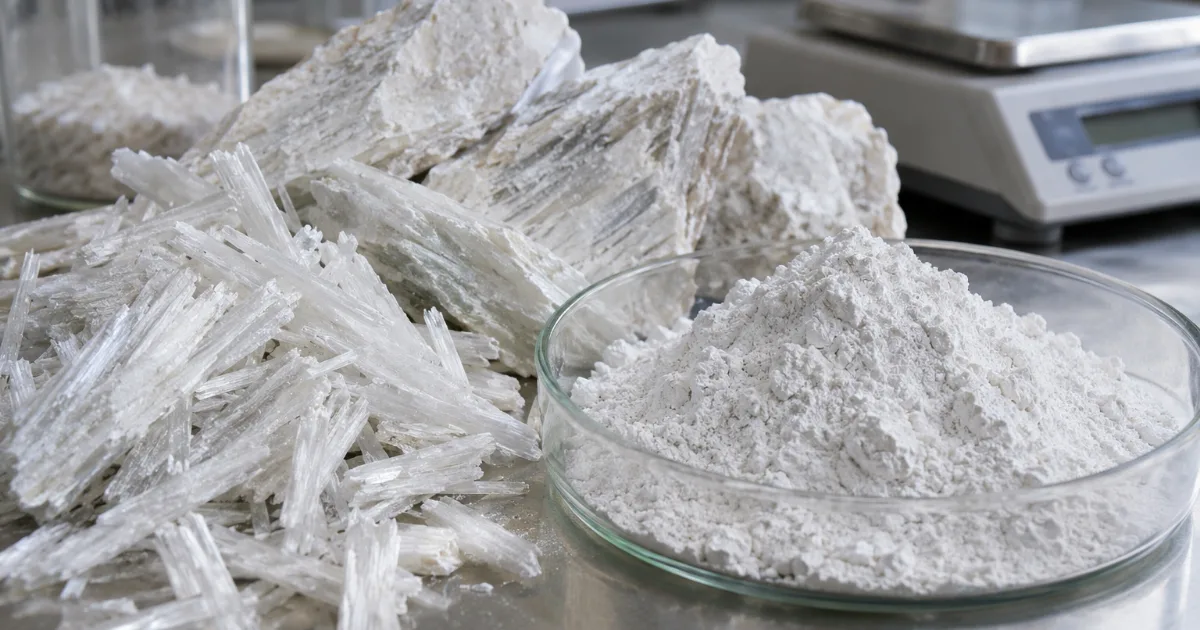
Wollastonite is a natural calcium silicate mineral. It is white, has low moisture and oil absorption, and often occurs in needle-like (acicular) crystals. These properties make it useful as a functional filler and as a source of calcium and silica in industrial processes. Rajasthan, with deposits in districts such as Sirohi and Dungarpur, is India’s main source of wollastonite.
Main uses
- Ceramics: in wall and floor tiles and sanitaryware, it can reduce firing time and shrinkage and improve strength.
- Paints and coatings: improves durability, scrub resistance and weathering as an extender pigment.
- Plastics and polymers: acicular grades reinforce and improve dimensional stability.
- Friction products and boards: used in brake linings and fibre-cement boards as a functional filler.
- Metallurgy: used in fluxes and mould powders in steel casting.
Ceramic buyers may also source feldspar and quartz together; see our feldspar and quartz guide.
Specifications to check
- Chemical composition: CaO and SiO2 content and limits on iron oxide (Fe2O3) for whiteness.
- Brightness and whiteness.
- Particle size distribution and mesh, and aspect ratio for acicular grades.
- Loss on ignition and moisture.
- Oil absorption for paints and plastics.
Request a certificate of analysis for every lot and keep retained samples.
Buying tips
Match the grade to the application — a ceramic grade differs from a high-aspect-ratio plastics grade. Run plant trials, agree tolerances in writing and check packing (HDPE bags, jumbo bags) and moisture protection. Verify the supplier using our supplier checklist. Group buyers can consolidate purchases as explained in ATTPL HOLDCO’s group procurement guide.
Frequently asked questions
Why is acicular wollastonite valued?
Its needle-like particles act as reinforcement in plastics, coatings and composites.
Does wollastonite replace other fillers?
It can partially replace or complement fillers like calcium carbonate or talc depending on the performance needed; trials are essential.
How is wollastonite packed?
Commonly in multi-wall paper or HDPE bags and jumbo bags, kept dry during storage and transport.
Sources and further reading
General information only. Specifications vary by application and supplier; confirm requirements with test reports and your technical team.