What feldspar and quartz do
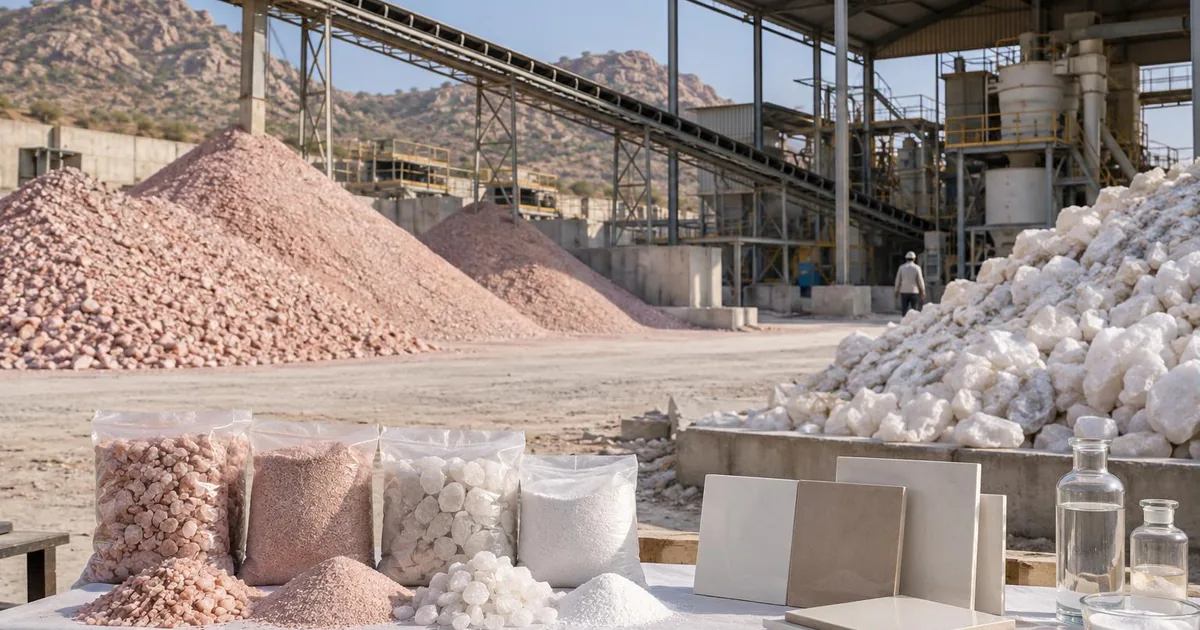
Every ceramic tile, washbasin and glass bottle depends on two common minerals: feldspar and quartz. Rajasthan is one of India's main sources of feldspar and also produces quartz and silica, which makes the state a natural sourcing base for ceramic and glass manufacturers. For buyers, the challenge is not finding material but getting consistent quality that suits the process. This guide explains the basics.
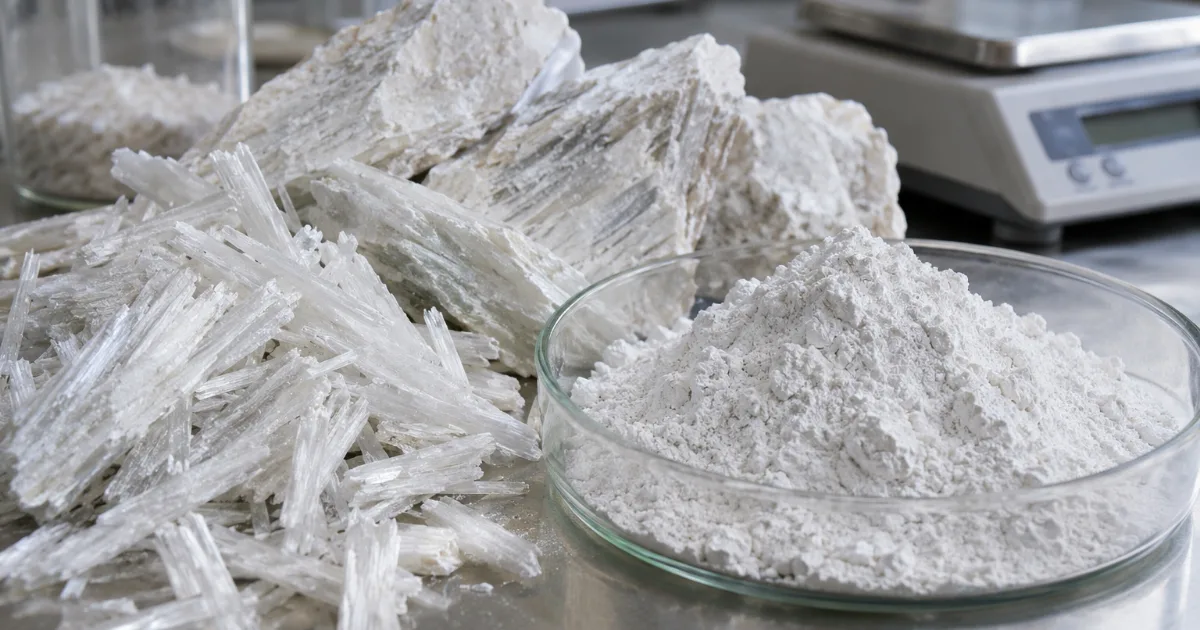
Feldspar is a group of aluminium silicate minerals that contain potassium, sodium or calcium. In ceramics it acts as a flux: it melts at kiln temperatures, binds the body together and helps create a dense, glassy structure. Potash feldspar and soda feldspar behave slightly differently, so recipes are designed around one type or a blend.
Quartz is crystalline silica. It gives ceramic bodies strength and controls shrinkage and thermal expansion. In glass making, high-purity silica is the main raw material, while feldspar supplies alumina and alkalis that improve durability and workability.
Where they are used
- Wall and floor tiles, including vitrified tiles.
- Sanitaryware such as washbasins and toilets.
- Tableware and electrical porcelain.
- Container glass, float glass and glass wool.
- Glazes and frits, paints, fillers and welding electrodes.
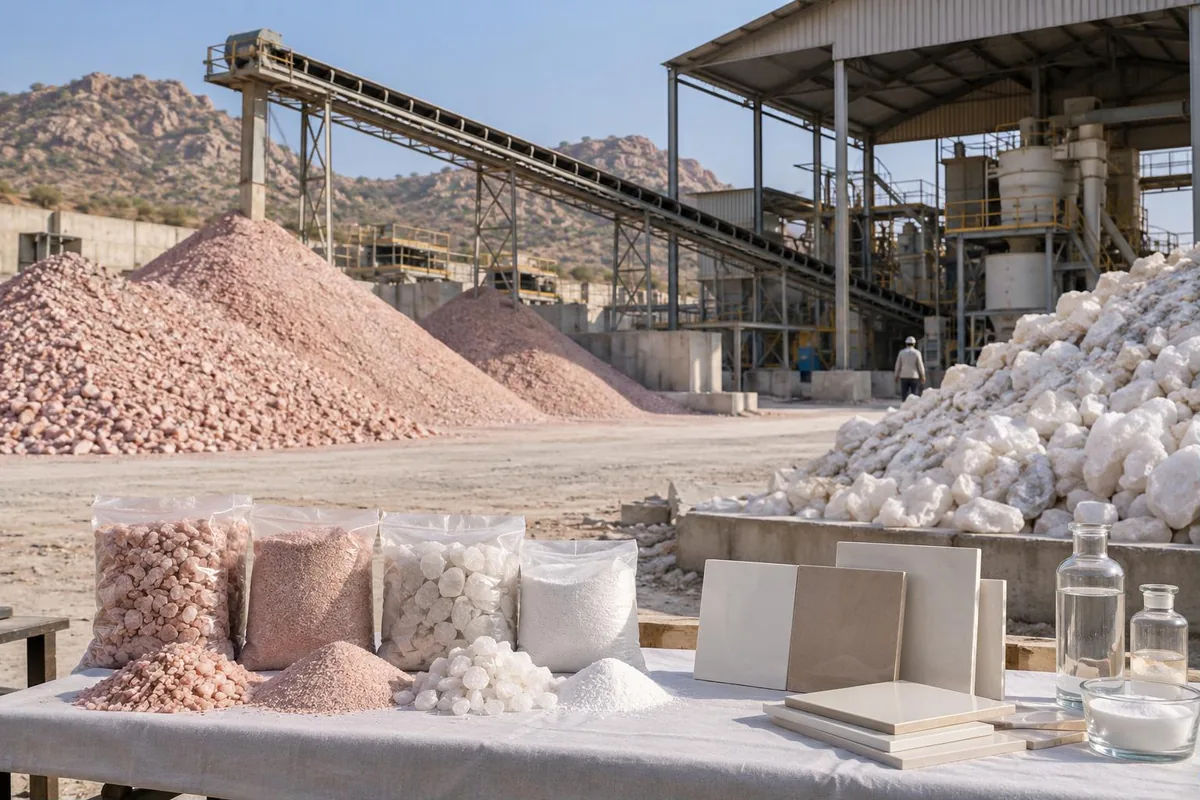
Specifications that matter
Before you place an order, agree the specification in writing. Typical parameters are:
- Chemical composition: K2O and Na2O content for feldspar; SiO2 content for quartz.
- Iron oxide (Fe2O3) and titanium oxide (TiO2): low levels are essential for white ceramics and clear glass.
- Particle size or mesh: lumps, grits or fine powder (for example 200 or 300 mesh), with a stated range.
- Whiteness or fired colour, often checked by firing a test button.
- Moisture content and freedom from foreign material such as mica, clay or stones.
Ask for a certificate of analysis with every lot. Our guide on reading a certificate of analysis for industrial minerals explains each line.
Choosing the right grade for your product
Not every plant needs the purest grade. A floor-tile body can often use feldspar with slightly higher iron, while sanitaryware glazes, white vitrified tiles and clear container glass need tighter limits. Paying for a premium grade you do not need raises costs, while buying a cheaper grade than your process can handle leads to rejections and kiln losses.
The practical approach is to start from your product: list the colour, strength and firing range you need, ask your technical team which chemical and size limits follow from that, and then shortlist suppliers who can meet those limits consistently, month after month. Running a small trial batch with each new source before switching fully is a sensible safeguard.
Testing and quality control
Large buyers usually approve a sample first, then test incoming lots at their own lab or an accredited third-party lab. Keep a reference sample from the approved lot, test every consignment for iron and particle size, and record results against the supplier and truck number. Consistency matters more than a single excellent result, because sudden changes in chemistry can cause colour defects, warping or glass faults.
Sourcing tips for industrial buyers
- Visit the mine or processing unit, or ask for a video walk-through of crushing, sorting and grinding.
- Check mining lease and pollution-control documents and GST details.
- Agree tolerances, sampling method and rejection terms in the purchase order.
- Plan packaging: jumbo bags, 50 kg bags or loose bulk, depending on your plant.
- Fix the logistics early; mineral powders must stay dry in transit.
Our broader industrial minerals sourcing guide covers contracts and supplier checks in more depth.
Logistics and compliance support in the ATTPL network
Regular mineral supply needs reliable trucks. ATTPL Fleet's supply chain solutions can plan full-truckload movements from Rajasthan to plants across India. For supply contracts and dispute-free terms, buyers can consult ATTPL Legal, and new manufacturing units can get set-up support from ATTPL Consultancy.
Work with ATTPL Mining & Minerals
ATTPL Mining & Minerals supplies industrial minerals and natural stone from Rajasthan to manufacturers and traders. See the industries we serve and our minerals range, or contact our team with your specification, monthly volume and plant location to discuss samples.
Frequently asked questions
What is the difference between potash and soda feldspar?
Potash feldspar is rich in potassium and soda feldspar in sodium. They melt differently, so ceramic recipes are designed around one type or a blend.
Why is low iron important in quartz and feldspar?
Iron oxide adds colour. Low iron levels are needed for white tiles, sanitaryware and clear glass.
Should I test every lot of minerals?
Yes. Test at least iron content and particle size for every consignment and compare it with the approved sample and certificate of analysis.