Where garnet is used
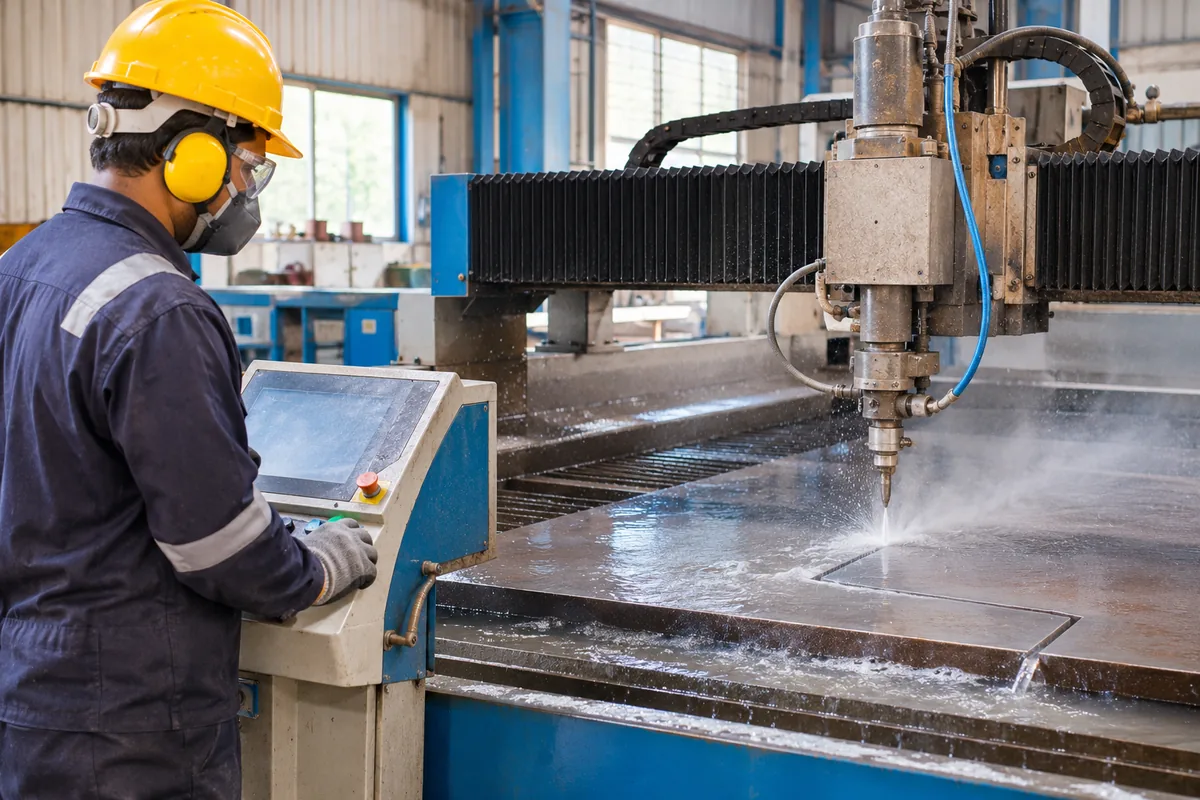
Garnet is a hard, dense mineral that has become a popular industrial abrasive. It is used to cut steel and stone with high-pressure water, to clean and prepare surfaces before painting, and as a filter medium in water treatment. India has garnet resources in several states, including deposits in Rajasthan. For buyers, choosing the right grade and checking quality is what makes the difference between smooth operations and wasted media.
- Waterjet cutting of metals, stone, glass and composites
- Abrasive blast cleaning of steel structures, ship hulls, tanks and pipelines
- Surface preparation before coating and painting
- Water filtration as a dense layer in multimedia filters
- Polishing and lapping in some specialised applications
Garnet is often preferred because it is hard, has low free silica content compared with silica sand, and can sometimes be recycled in blasting operations. Workplace safety rules still apply, so dust control and protective equipment remain important; see our note on dust control at crushers and plants.
Understand grades and mesh sizes
Garnet abrasive is graded by particle size, expressed as mesh. Coarser grades remove material quickly and create a rougher surface profile, which suits heavy blasting. Finer grades give smoother finishes and are common in waterjet cutting. Always specify the size range rather than a single number, and ask for the sieve analysis. Our guide to mineral powder mesh size explains how mesh grading works.
Quality points to check
Good garnet abrasive is clean, dry and consistent. Ask the supplier for a certificate of analysis and check:
- Mineral type and garnet content
- Particle size distribution within the agreed range
- Moisture content, since damp media clogs feed systems
- Dust and fines content
- Presence of soluble salts or contaminants that can affect coating quality
- Hardness and specific gravity within normal limits
Our guide to the certificate of analysis for industrial minerals explains how to read these reports.
Packing, storage and trial runs
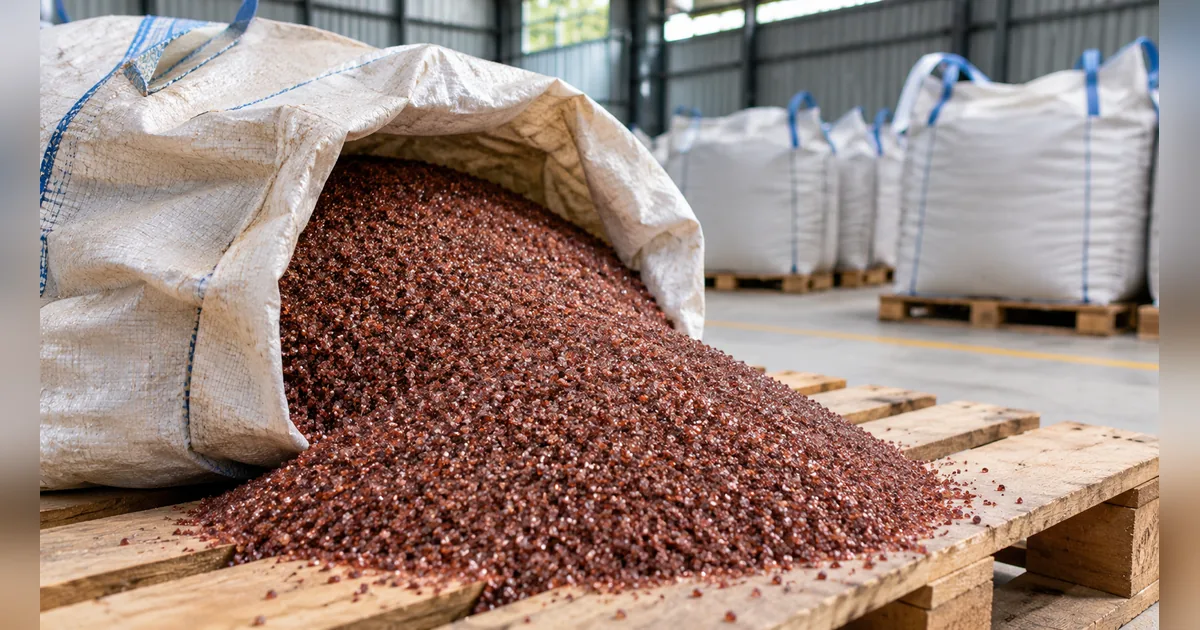
Garnet is usually supplied in bags or bulk bags. Check that packing is strong and moisture-proof, and store material on pallets in a dry place. For a new supplier, run a trial batch on your actual equipment and compare cutting speed, surface finish, consumption and dust levels with your current media before placing a large order. Keep a retained sample from every lot for future comparison.
Track consumption carefully during the trial. A cheaper abrasive that breaks down quickly may need more material per square metre of blasting or per metre of cut, and may produce more dust and waste for disposal. Compare the total cost of the job, including labour time and disposal, rather than only the purchase price of the media. For waterjet users, also check how the abrasive affects nozzle and mixing tube wear, since poor quality grit with oversize particles can cause blockages and stoppages.
Buying tips
- Specify application, grade, size range and packing in the purchase order
- Ask for lot-wise test reports with every delivery
- Confirm the supplier's mining and dispatch documents are in order
- Agree on how quality complaints will be handled
For regular requirements, a rate and quality agreement for a fixed period, with clear specifications and test methods, gives both buyer and supplier stability and reduces disputes.
ATTPL Mining & Minerals
ATTPL Mining & Minerals helps buyers source industrial minerals to clear specifications. Toll-free: 1800 890 0815.
Frequently asked questions
Why is garnet used in waterjet cutting?
Its hardness and density help cut hard materials efficiently with high-pressure water.
Can garnet be reused in blasting?
In many systems it can be recovered and recycled a few times, depending on breakdown and contamination.
Which mesh size should I buy?
It depends on your equipment and finish required; ask your equipment maker and run a trial.
Sources and further reading
This article is general buying information, not technical or safety certification.