Key properties
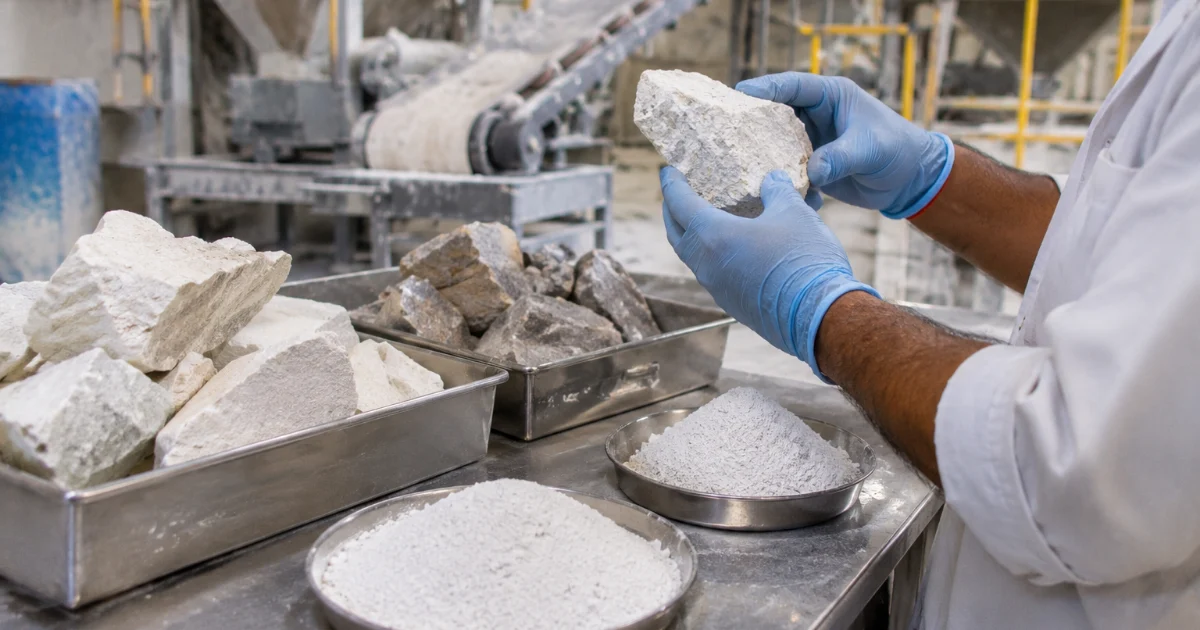
Soapstone (steatite) is a soft rock made mostly of the mineral talc. Ground into fine powder, talc is used in a surprising range of products — paints, plastics, paper, ceramics, rubber and cosmetics. Rajasthan is among the important producers of soapstone and talc in India. For industrial buyers, choosing the right grade and supplier is key to consistent product quality.
- Very soft and smooth with a greasy feel.
- Chemically inert and heat resistant.
- Platy particles that improve stiffness and barrier properties in plastics and paints.
- Whiteness and brightness that vary by deposit and processing.
Main industrial uses
- Paints and coatings: extender that improves durability and finish.
- Plastics: filler that improves stiffness and dimensional stability.
- Ceramics: improves firing behaviour in tiles and sanitaryware bodies.
- Paper: pitch control and filler.
- Rubber: dusting and filler.
- Cosmetics and pharmaceuticals: only specially purified grades meeting strict standards.
Quality parameters to check
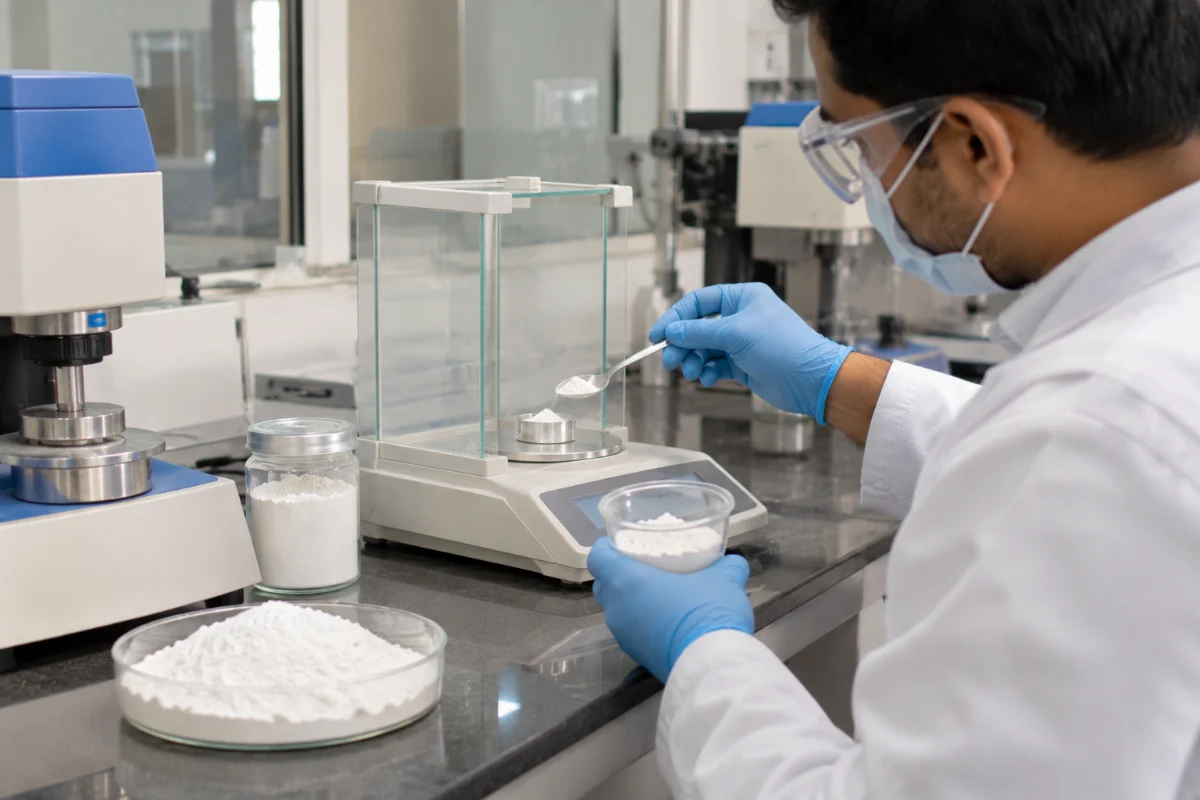
Industrial buyers usually specify chemical composition (such as silica, magnesia and impurities like iron and calcium), whiteness and brightness, particle size distribution, oil absorption, loss on ignition and moisture. Cosmetic and pharmaceutical grades must meet stringent purity and safety standards, including absence of harmful mineral contaminants. Always request a certificate of analysis for each lot.
Testing and consistency
Samples should be tested at the buyer's lab or an accredited lab before approval, then lots checked periodically. Variations in whiteness or particle size can change paint colour, plastic properties or ceramic shrinkage. Agree specifications and tolerances in the purchase contract.
Sourcing tips
- Verify the supplier's mining lease or processing licence and GST registration.
- Visit the processing unit if possible.
- Ask for references from buyers in your industry.
- Check packing, moisture protection and transport arrangements.
Our supplier verification checklist explains the steps. Buyers of related minerals may also find our guides to feldspar and quartz and limestone and dolomite useful.
Matching grades to applications
Talc grades differ widely, and the right grade depends on what the buyer is making. Paint makers may prioritise whiteness, oil absorption and particle size; plastic compounders look at particle shape and top-cut size for stiffness; ceramic makers check chemistry and firing behaviour. A grade that works well in one industry may perform poorly in another. Share your application and target properties with suppliers so that they can recommend suitable grades and supply representative samples for trials.
Packaging, storage and logistics
- Specify bag type, weight and labelling with lot numbers.
- Store bags off the floor in dry, covered areas.
- Protect from moisture during transport with covered trucks.
- Keep lot records linked to certificates of analysis.
Good handling preserves quality from mine to factory and makes complaints easier to trace and resolve.
Questions to ask a new supplier
- Which deposits and processing plants supply this grade?
- What is the typical lot-to-lot variation in key parameters?
- Which industries currently use this grade?
- What is the monthly capacity and lead time?
- How are complaints and rejections handled?
Clear answers to these questions reveal whether a supplier can support long-term, consistent supply.
Working with ATTPL Mining
ATTPL Mining helps industrial buyers understand mineral grades, documentation and sourcing in Rajasthan. For specifications, sampling or sourcing questions, contact ATTPL Mining. Logistics planning for bulk minerals is covered by ATTPL Fleet, and trade compliance by ATTPL Consultancy.
Frequently asked questions
Is soapstone the same as talc?
Soapstone is a rock made mostly of talc; talc is the mineral, usually sold as ground powder.
Which industries use talc?
Paints, plastics, ceramics, paper, rubber and, with purified grades, cosmetics and pharmaceuticals.
What should a talc certificate of analysis include?
Chemical composition, whiteness, particle size, moisture and other parameters agreed in the purchase specification.
Is all talc suitable for cosmetics?
No. Only specially processed grades meeting strict purity and safety standards should be used in cosmetics and pharmaceuticals.
How should talc samples be evaluated?
Test them in your own formulation or process trials, alongside lab analysis, before approving a grade.