Two minerals, many industries
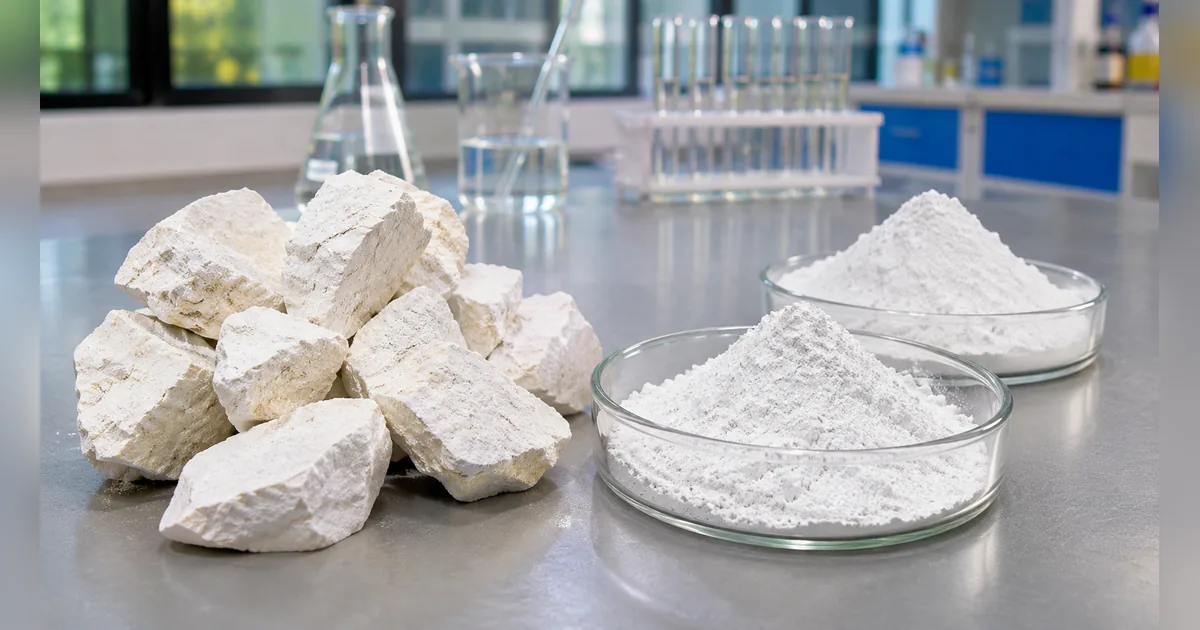
Limestone is mainly calcium carbonate; dolomite is calcium magnesium carbonate. Both occur widely in India, including Rajasthan, and both are essential raw materials for many industries. Buyers usually specify the chemical composition, particle size and impurities their process can tolerate, so understanding these basics helps you buy the right material at the right price.
Where they are used
- Cement: limestone is the main raw material.
- Steel: limestone and dolomite act as fluxes in iron and steel making.
- Glass: dolomite and limestone supply calcium and magnesium oxides.
- Chemicals and lime: burnt into quicklime and hydrated lime for many processes.
- Agriculture: ground limestone and dolomite correct soil acidity; dolomite also supplies magnesium.
- Fillers: finely ground grades are used in paints, plastics, paper and construction products.
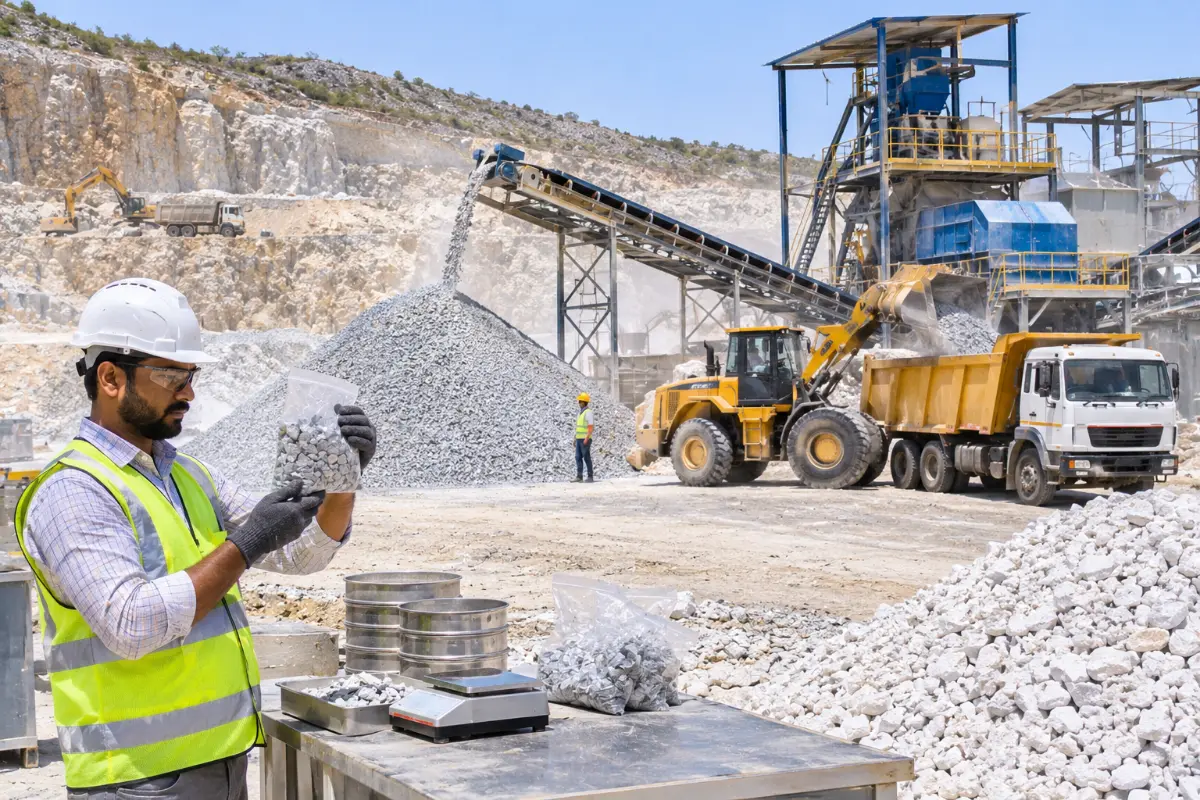
Key quality parameters
- Calcium oxide (CaO) and magnesium oxide (MgO) content.
- Silica, alumina, iron oxide and other impurities that affect the process.
- Loss on ignition (LOI).
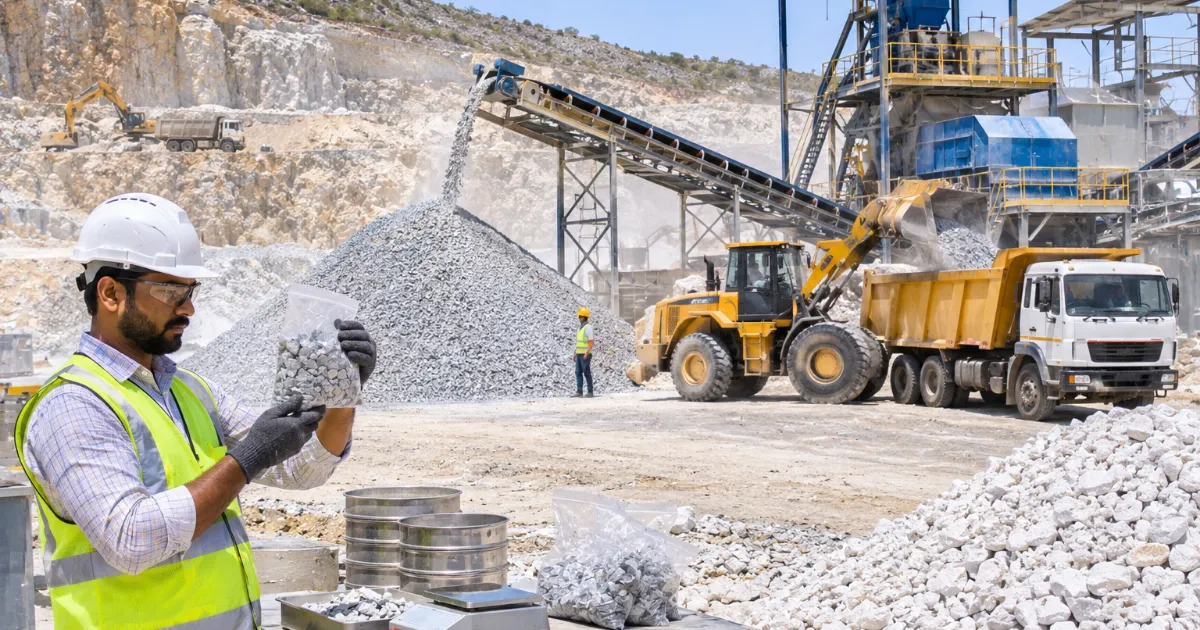
- Particle size and distribution for the intended use.
- Moisture, whiteness or brightness for filler grades.
Ask for a certificate of analysis for every lot and agree the test methods in advance; our guide to the certificate of analysis explains how to read one.
Sourcing and supply tips
- Visit or audit the source to check consistency of the deposit and processing.
- Agree specifications, tolerances and penalties for off-spec material in the contract.
- Take independent samples on receipt for important lots.
- Plan logistics carefully — freight is often a large share of delivered cost for bulk minerals.
Our industrial minerals sourcing guide and supplier verification checklist cover these steps in detail.
Matching grades to applications
The same mineral can be valuable for one industry and unsuitable for another. Cement plants can often use a wider range of limestone quality, while chemical, glass and filler applications need higher purity and tighter control of iron and other impurities. Steel plants care about calcium and magnesium content as well as size and strength of the lumps used as flux.
Before buying, share your process requirements with the supplier and ask for test results on representative samples, not just a typical analysis. For long-term supply, agree how the deposit will be mined and blended to keep quality consistent from lot to lot.
Environmental and compliance points
Responsible sourcing matters to customers and regulators. Ask suppliers about mining leases, environmental clearances and dust control at crushing plants. Proper documentation such as transit passes and invoices protects buyers from legal and reputational risk. Working with compliant suppliers also reduces the chance of supply disruption due to regulatory action.
Logistics for bulk minerals
Bulk minerals move by truck and rail. Choosing the right mode, vehicle and loading method affects cost and quality; see the ATTPL Fleet article on rail vs road freight for bulk cargo. Contracts with suppliers and transporters should be clear about quality, quantity and liability. To source limestone, dolomite and other industrial minerals, contact ATTPL Mining.
Frequently asked questions
What is the difference between limestone and dolomite?
Limestone is mainly calcium carbonate, while dolomite contains both calcium and magnesium carbonate.
What should be on a limestone certificate of analysis?
Typically CaO, MgO, silica, alumina, iron oxide, loss on ignition and particle size, along with the test methods used.
Is dolomite used in agriculture?
Yes. Ground dolomite is used to correct soil acidity and supply magnesium, following agricultural advice.