What Is Silica Sand?
See also: Mineral Sampling and Lab Testing: A Buyer's Guide
Silica sand looks simple, but for glass makers and foundries small differences in chemistry and grain size have a big effect on product quality. A sand that works well for moulding castings may be unsuitable for clear glass, and the reverse is also true. This guide explains the key silica sand specifications buyers look at, how requirements differ between glass and foundry use, and how to test and agree on specifications with a supplier. Exact limits depend on your process and product, so always confirm specifications with your technical team.
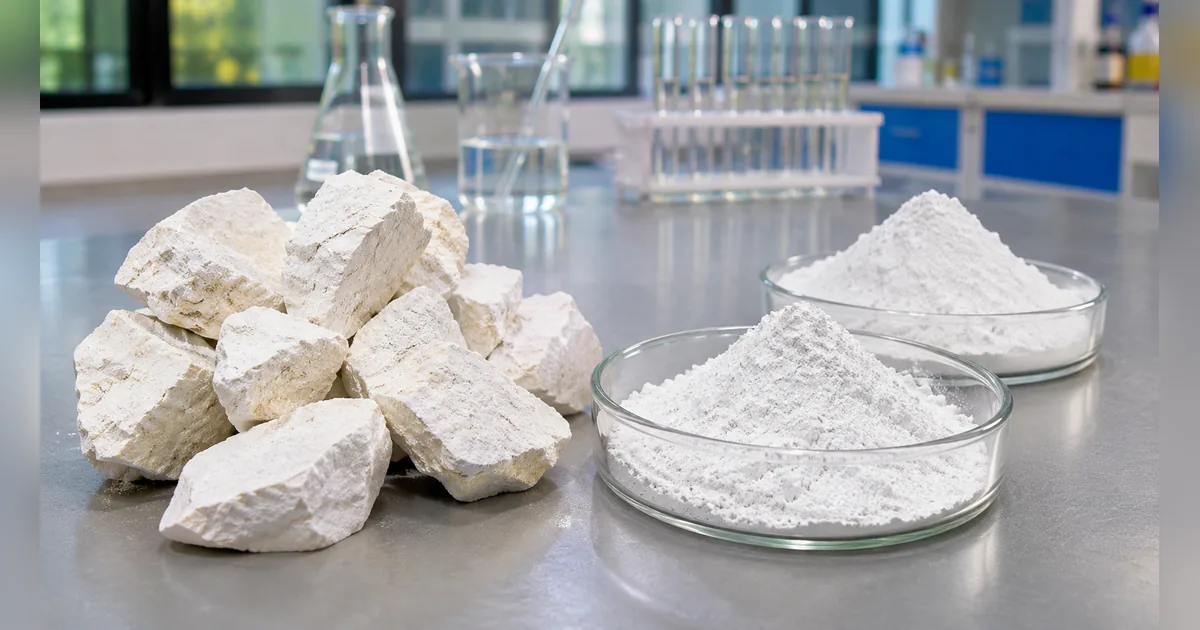
Silica sand is sand made up mostly of quartz, or silicon dioxide (SiO2). It is mined from deposits and then washed, graded and sometimes processed further to reduce impurities. Rajasthan has deposits of silica sand and other industrial minerals used by glass, foundry, ceramic and construction industries.
Two buyers may both order silica sand and need very different material. That is why written specifications matter.
Key Silica Sand Specifications
- SiO2 content: the percentage of silica; higher purity is generally needed for glass
- Iron oxide (Fe2O3): affects colour, especially in clear and flint glass
- Alumina (Al2O3) and other oxides such as TiO2, CaO and MgO
- Loss on ignition (LOI): indicates organic matter or carbonates
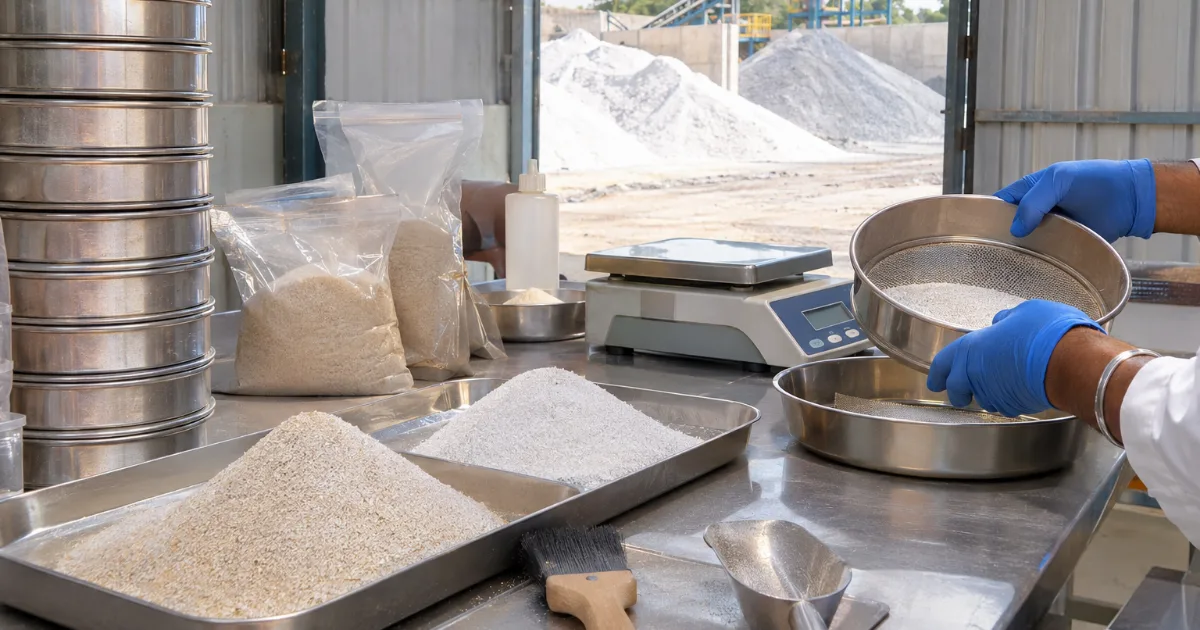
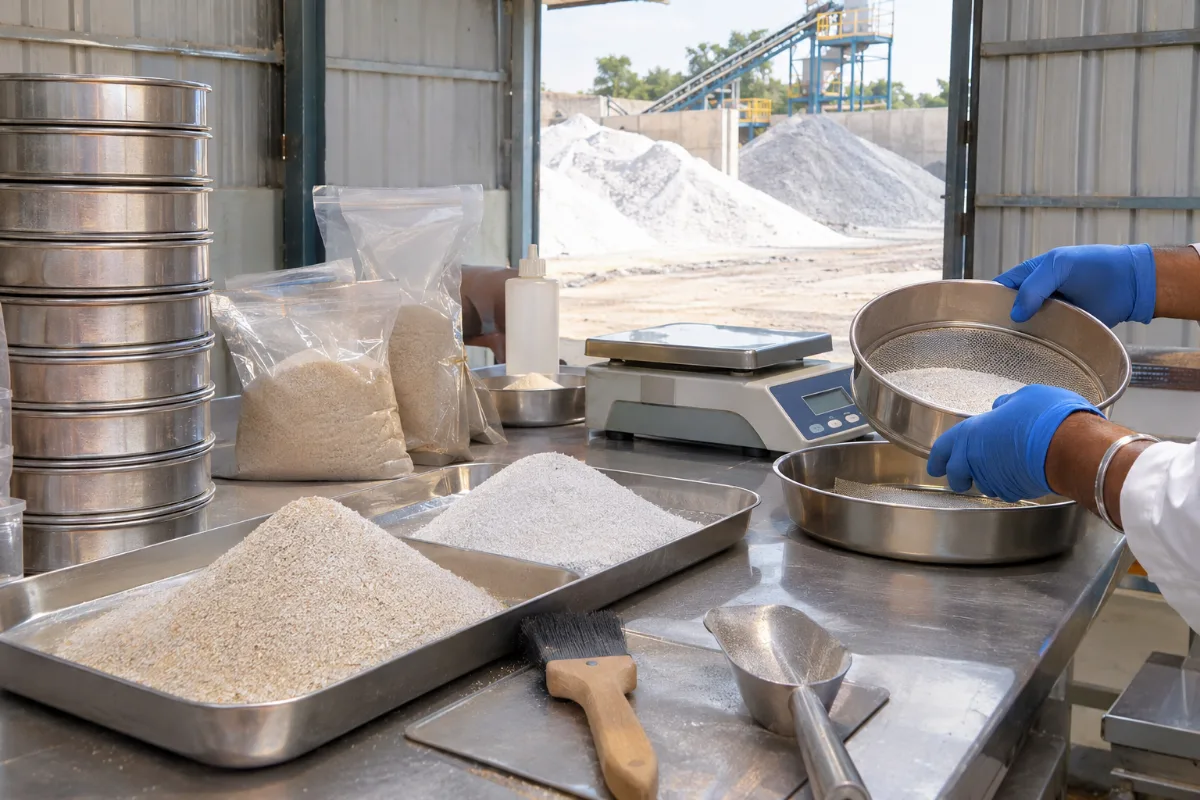
- Grain size distribution: the percentage retained on each sieve size
- AFS grain fineness number: a common foundry measure of average fineness
- Grain shape: rounded, sub-angular or angular
- Moisture content and clay content
Each specification should state the test method, acceptable range and how samples will be drawn.
Silica Sand Specifications for Glass Manufacturing
Glass makers care most about chemistry. Iron oxide is a key concern because even small amounts tint the glass green or brown, so clear glass and solar glass need low-iron sand, while coloured container glass may accept more. Chromium and other colouring oxides are also controlled.
Grain size matters for melting. Very fine particles can create dust and carry-over in the furnace, while coarse grains melt slowly. Glass makers usually specify a narrow size band with limits on oversize and fines. Consistency between lots is as important as the average values.
Because furnace batches are calculated on the expected chemistry, a lot that drifts outside the agreed range can upset colour, melting behaviour and bubble levels. Glass buyers often ask for regular composite samples, retained reference samples and advance notice if the supplier changes the mining face or processing route.
Silica Sand Specifications for Foundry Use
Foundries use silica sand to make moulds and cores. Here, physical properties often matter more than very high purity.
- Grain fineness (AFS number) affects casting surface finish and mould permeability
- Grain distribution affects packing and binder demand
- Rounded grains generally need less binder than angular grains
- Low clay and fines help resin-bonded systems
- Acid demand value matters for some chemical binder systems
- Refractoriness and thermal behaviour influence defects such as veining
Green sand, resin-bonded and core sand processes each have their own preferences, so share your process with the supplier. Many foundries also reclaim and reuse sand, so new sand must blend well with reclaimed sand already in the system.
Testing and the Certificate of Analysis
Ask for a certificate of analysis (COA) with each lot, showing chemical and sieve results and the test methods used. Our guide to the industrial minerals certificate of analysis explains how to read one.
For critical applications, test incoming material at your own lab or an independent lab and compare it with the COA. Suppliers that follow documented quality systems make this easier, and buyers can ask about relevant certification and quality systems during supplier evaluation.
Sourcing, Logistics and Supplier Checks
Before placing a regular order, agree on specifications in writing, test trial lots and confirm packing (bulk, jumbo bags or smaller bags). Moisture and contamination can change during transport, so covered trucks and clean loading matter. Reliable road transportation helps maintain steady supply to plants.
A structured vendor due diligence checklist can help procurement teams assess supplier capacity, documentation and consistency.
ATTPL Mining & Minerals can help glass, foundry and other industries source silica sand to agreed specifications. Contact ATTPL Mining & Minerals to share your requirement.
Key takeaway: Glass makers focus on purity and low iron, while foundries focus on grain size, shape and clay content; define specifications in writing and verify each lot against a certificate of analysis.
Frequently asked questions
Why does iron content matter in silica sand for glass?
Iron oxide tints glass green or brown, so clear and solar glass need low-iron sand, while some coloured glass can accept more.
What is the AFS grain fineness number?
It is a foundry measure of the average fineness of sand based on sieve analysis. Higher numbers mean finer sand.
Can the same silica sand be used for glass and foundry?
Sometimes, but needs differ. Glass prioritises chemistry, foundry prioritises grain properties, so check against both specifications.