Mesh and micron basics
For many industrial uses, how fine a mineral powder is matters as much as its purity. Specifying the right size avoids paying for grinding you do not need, or getting powder that does not perform.
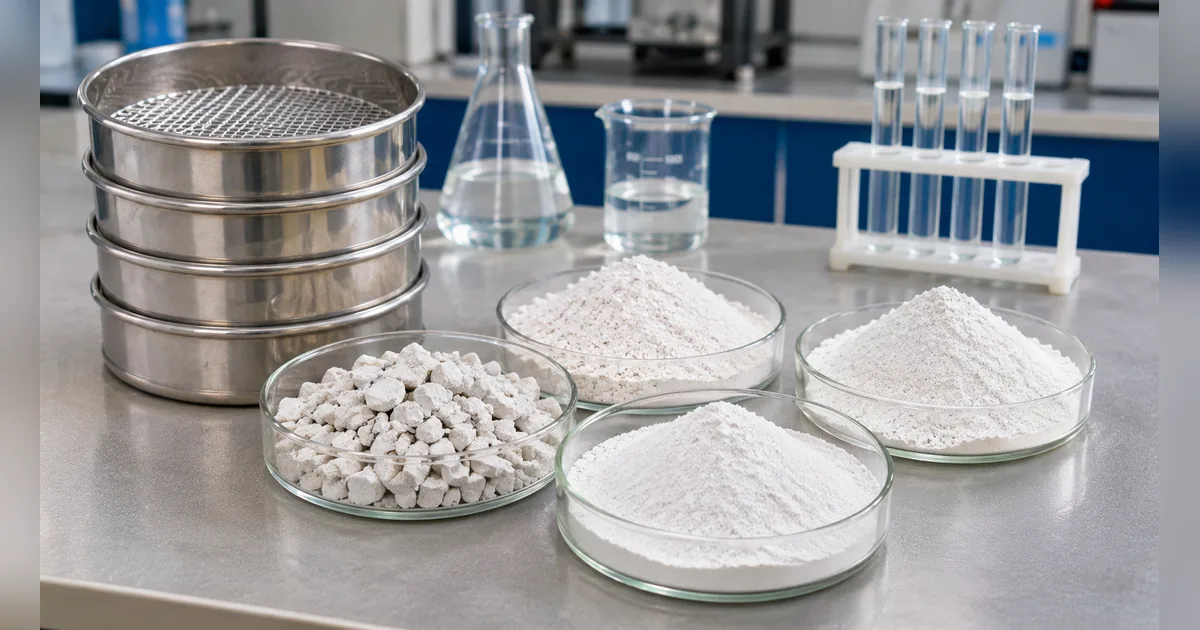
- Mesh is the number of openings per inch of a sieve
- Higher mesh means finer powder
- Micron (µm) measures particle size directly
- Fine grades often need air classification
Specify it properly
State the required mesh or micron, the allowed residue and, for fine grades, a particle size distribution such as D50 or D97. See our guides to calcite powder and talc.

Test and agree
Test samples in a lab and write the size limits into your purchase contract.
ATTPL Mining & Minerals
ATTPL Mining & Minerals helps buyers source powders to clear specifications. Toll-free: 1800 890 0815.
Frequently asked questions
Is finer always better?
No; choose the size your process needs, as finer grades cost more.
What is D97?
The size below which 97 percent of particles fall.
Who tests particle size?
Accredited labs, using sieves or laser diffraction.
Sources and further reading
This article is general buying information, not technical certification.