A living craft
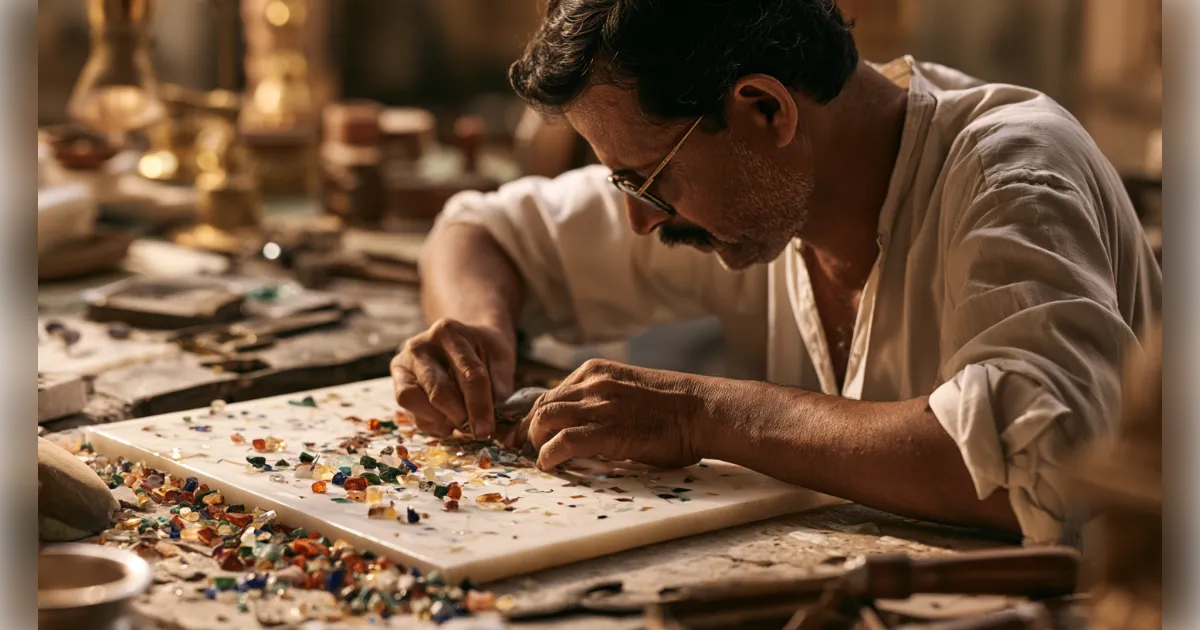
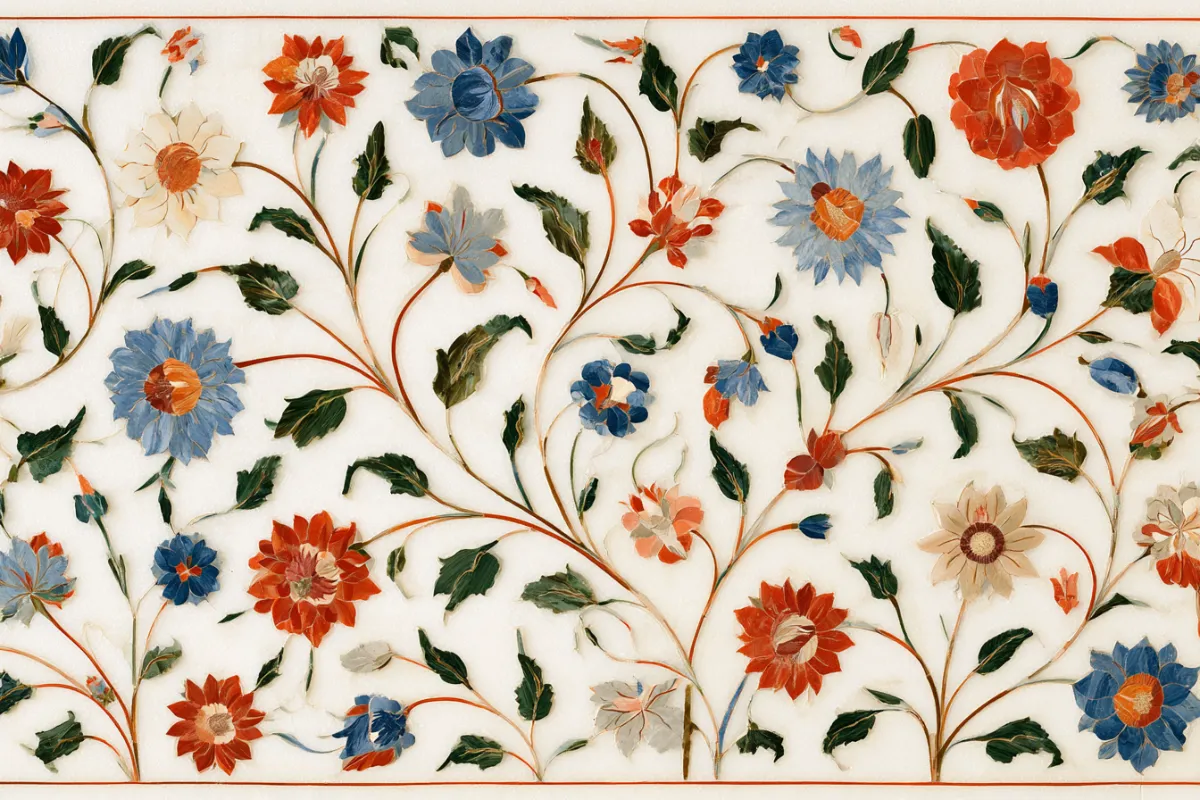
Marble inlay is a traditional Indian craft in which artisans cut thin pieces of coloured stone and fit them into carved recesses in white marble to create floral and geometric designs. It is used for table tops, wall panels, boxes and floor medallions. The quality depends on the skill of the artisan and the stones used.
How to judge quality
- Joints should be tight and almost invisible
- Stone pieces should be cut to follow the design smoothly
- Colours should come from natural stones, not paint
- The base marble should be free of cracks and repairs
- The finish should be smooth and evenly polished
Ask the seller to identify the stones used and confirm it in the invoice.
Pricing and buying
Fine inlay takes days or weeks of work, so price reflects the density of the design, the stones and the size. Very cheap pieces may use resin or printed patterns. Buy from established workshops and pack large pieces carefully, as in packing and transporting slabs safely.
Care
Clean with a soft cloth and mild, neutral cleaner, avoid acidic liquids, and use coasters on table tops. Our marble sealing guide explains stain protection.
ATTPL Mining & Minerals
ATTPL Mining & Minerals connects buyers with verified marble suppliers and craft workshops in Rajasthan. Toll-free: 1800 890 0815.
Frequently asked questions
How can I tell real inlay from imitation?
Real inlay has fitted stone pieces with fine joints you can feel slightly; prints and resin look flat and uniform.
Can inlay be used on floors?
Yes, as medallions or borders, but protect them from heavy furniture and abrasion.
Does inlay need sealing?
Sealing can help resist stains; follow the maker's advice.
Sources and further reading
This article is general buying information. Verify materials and craftsmanship with the seller before purchase.