Why Rajasthan sandstone is in demand
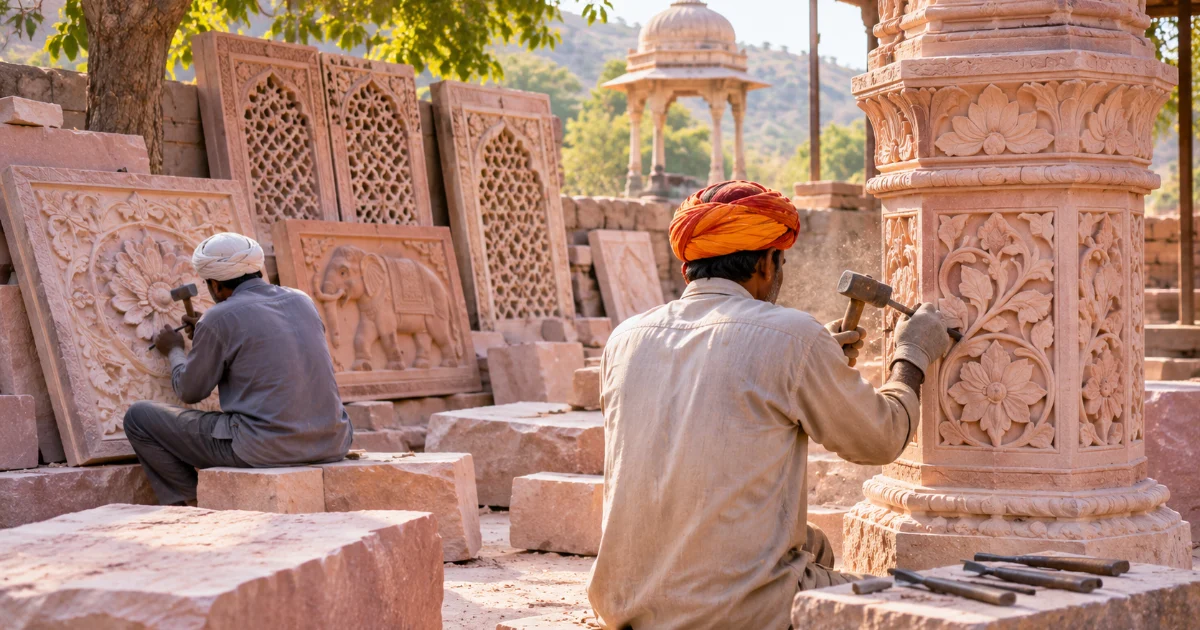
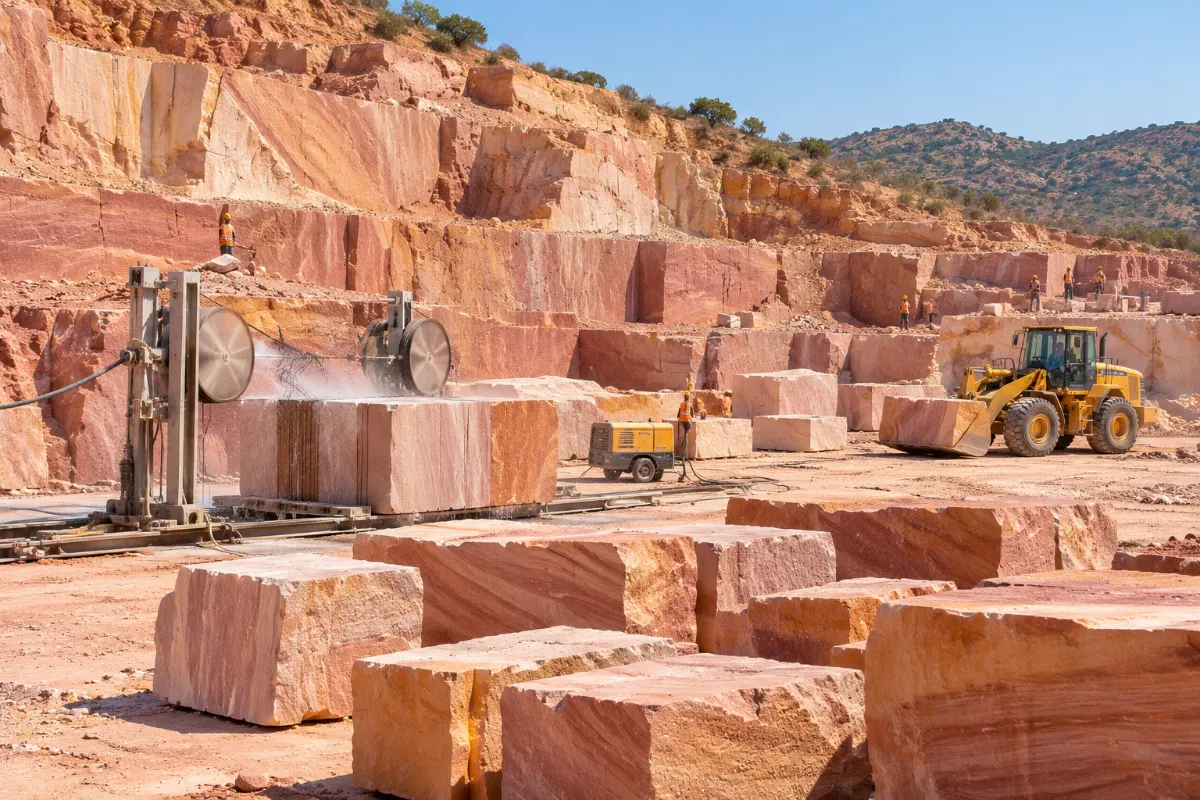
Rajasthan is one of India's main sources of sandstone. Varieties from Bharatpur district (Bansi Paharpur), Dholpur, Karauli and Jodhpur are known for warm pink, red and buff colours, fine grain and good carving quality. They are used in temples, heritage-style buildings, jaali screens, facades, columns, paving and landscape work. Bansi Paharpur pink sandstone has been widely reported as the stone used for the Ram Mandir in Ayodhya, which has raised interest in it.
Properties to check before buying
- Colour and shade consistency across the full order, seen on large samples in daylight
- Grain size and texture, which affect carving detail and finish
- Water absorption and porosity, important for outdoor and wet areas
- Compressive strength and soundness, with no open cracks or soft clay bands
- Bedding direction: blocks should be used along the natural bedding for structural members
Ask for test reports from an accredited laboratory, and compare them with the relevant BIS standard for sandstone slabs and blocks. Our supplier verification checklist explains what documents to request.
Finishes and uses
- Natural or cleft: rustic look for walls and landscaping
- Honed or smooth: interiors, steps and window frames
- Sand-blasted, bush-hammered or flamed-style textures: anti-slip outdoor paving
- Hand or CNC carving: pillars, domes, jaalis and decorative panels
For exterior walls, see our guide on natural stone wall cladding, and for outdoor floors, Kota stone, sandstone and granite paving.
Ordering, sizes and logistics
Give the supplier a clear drawing-based cutting list with thickness, edge details and tolerance. Large carved elements need extra time and careful crating. Order a small surplus for breakage and future repairs from the same lot, because colour can vary between quarries and benches. Plan loading, padding and transport as described in how to pack and transport stone slabs safely.
Care after installation
Sandstone is porous, so use a breathable penetrating sealer where staining is a concern, clean with neutral cleaners and avoid acids. Ensure good drainage and damp-proofing to limit salt and moisture damage over time. Responsible sourcing from legally operating quarries also protects your project; read our responsible sourcing guide.
How ATTPL Mining and Minerals can help
ATTPL Mining and Minerals helps architects, builders and buyers source Rajasthan sandstone and other natural stone, arrange samples and test reports, and coordinate dispatch. For construction support, ATTPL Infra offers infrastructure services.
Frequently asked questions
Is Bansi Paharpur sandstone good for outdoor use?
It is widely used outdoors, but check water absorption and strength test results for your lot and use appropriate finishes and sealers.
What is the difference between Dholpur and Bansi Paharpur stone?
Both are fine-grained Rajasthan sandstones; they differ in colour range and quarry characteristics. Compare large samples and test reports for your project.
How much extra stone should I order?
Many buyers order a small surplus for breakage and future repairs from the same lot; discuss the exact margin with your supplier.
Sources and further reading
This article is general information for buyers of natural stone and minerals, not engineering advice. Properties vary by quarry and lot; rely on test reports and professional advice for your project.