How Travertine and Marble Are Formed
Travertine and marble are both natural stones with a long history in architecture, and they are often displayed side by side in stone showrooms. They can look similar at first glance, especially in light beige and cream shades, but they behave differently once installed. Choosing between them affects appearance, maintenance and where the stone can be used. This travertine vs marble guide explains how the two stones form, how they differ in look, porosity and finish, and what to check before buying for homes, hotels or commercial projects in India.
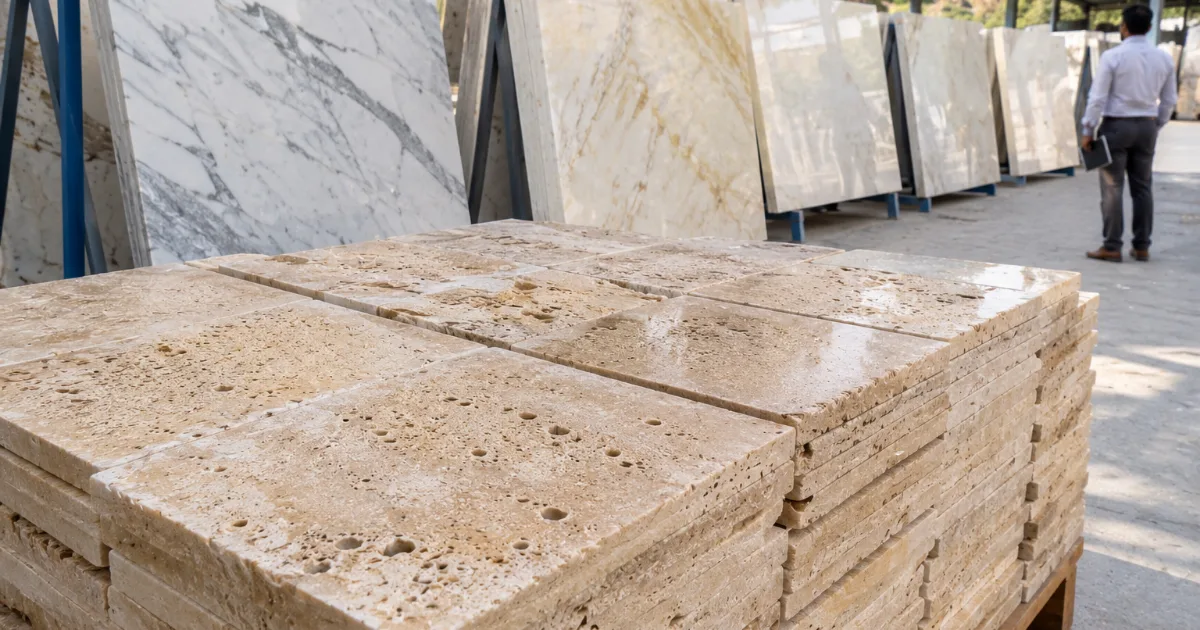
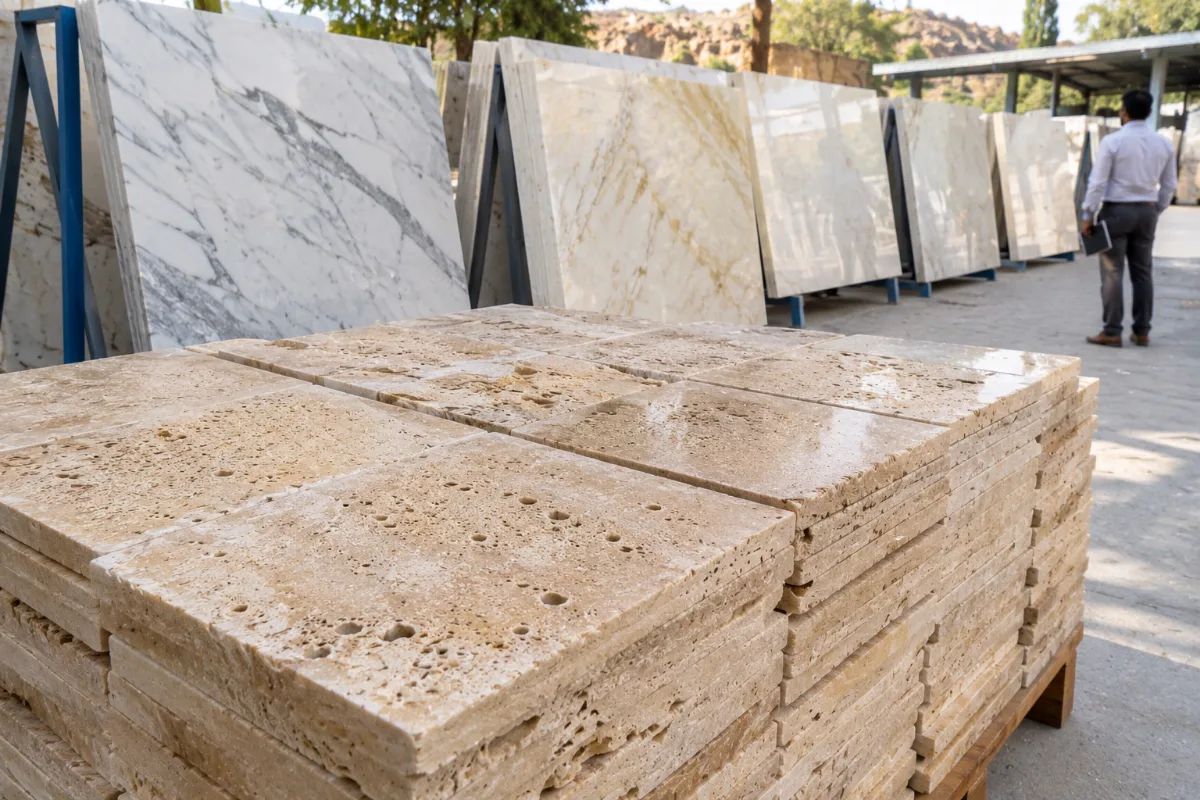
Travertine is a type of limestone formed by mineral deposits from springs, often hot springs. Gas bubbles trapped during formation leave natural holes and pits, which give travertine its characteristic texture.
Marble is a metamorphic rock formed when limestone or dolomite is transformed by heat and pressure deep underground. The process recrystallises the stone, creating a denser structure with veins and patterns. Rajasthan is well known for its marble deposits, described in our Rajasthan marble buying guide.
Travertine vs Marble: Appearance and Finishes
Travertine usually comes in earthy tones such as ivory, beige, walnut and silver, with a rustic, textured look. Its holes may be left open, or filled with resin or cement, before honing or polishing.
Marble ranges from pure white to green, pink, grey and black, often with dramatic veining. It takes a high polish well, giving a glossy, formal look.
- Polished: shiny surface, common for marble interiors
- Honed: smooth matte finish for both stones
- Tumbled: softened edges and aged look, common for travertine
- Brushed: lightly textured surface for better grip
Porosity, Durability and Maintenance
Both stones are calcium carbonate based, so both can etch when exposed to acids such as lemon juice, vinegar or harsh cleaners. Unfilled travertine has open pores that can collect dirt, while marble varieties vary in density and absorption.
- Seal both stones as recommended by the supplier or installer
- Clean with pH-neutral stone cleaners
- Wipe spills quickly, especially acidic ones
- Use mats at entrances to reduce abrasion from sand and grit
- Reseal periodically based on use and traffic
Ask for the water absorption and other test data for the specific lot you are buying rather than relying on general rules.
In Indian homes, kitchen and dining areas see frequent spills of acidic foods, so many buyers choose a honed finish there, where minor etching is less visible than on a high polish. Both stones can usually be re-honed or re-polished by professionals if the surface becomes dull over time.
Where Travertine and Marble Work Best
Travertine suits outdoor patios, pool surrounds, garden paths and feature walls, especially with tumbled or brushed finishes that offer grip and stay cooler underfoot than many darker stones. Indoors it gives a warm, natural look to living areas and bathrooms.
Marble suits living room floors, staircases, wall cladding, countertops for low-acid use and prestige areas such as lobbies. Polished marble can be slippery when wet, so honed or textured finishes are often chosen for wet areas. Larger projects benefit from coordination with the construction team; see the kind of civil work handled on the ATTPL Infra projects page.
Buying Tips for Travertine and Marble
- See full slabs or a good sample of tiles, not just one piece
- Check colour and vein consistency across the lot
- Confirm thickness, finish and whether holes are filled
- Look for cracks, chips and resin patches
- Buy extra quantity for cutting wastage and future repairs
- Keep samples from the approved lot for reference
For a wider view of granite, sandstone and other options, the natural stone buying guide for Jaipur is a useful companion read.
Transport, Handling and Next Steps
Agree in writing on the approved sample, finish, thickness, tolerances and delivery schedule before payment, and inspect the stone on arrival before installation begins.
Stone is heavy and brittle, so plan safe packing and delivery. Our guide on how to pack and transport marble and granite slabs safely explains good practice, and dependable road transportation services help bring slabs to site without damage.
ATTPL Mining & Minerals can help buyers source marble, sandstone and other natural stones from Rajasthan. Explore our minerals and stones, or contact ATTPL Mining & Minerals to discuss your project needs.
Key takeaway: Choose travertine for warm, textured looks and outdoor areas, and marble for polished, veined interiors; seal both, avoid acidic cleaners and inspect the actual lot before buying.
Frequently asked questions
Is travertine a type of marble?
No. Travertine is a form of limestone formed by spring deposits, while marble is metamorphic rock formed under heat and pressure.
Which is easier to maintain, travertine or marble?
Both need sealing and pH-neutral cleaners. Unfilled travertine needs extra care because its open pores can collect dirt.
Is travertine good for outdoor use in India?
Tumbled or brushed travertine is often used for patios and pool areas. Check grip, absorption and local climate suitability.